


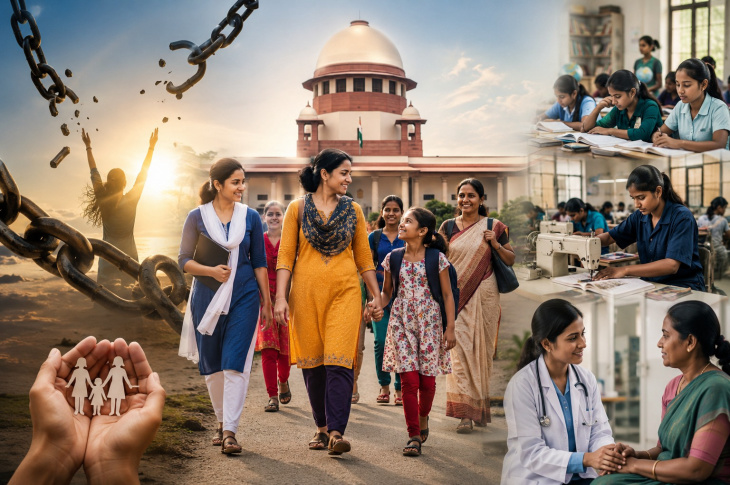


Supreme Court: Rescuing Human Trafficking Victims Is Not Enough, States Must Ensure Rehabilitation


Introduction
Human trafficking remains one of the most serious human rights violations in India and across the world. Every year, thousands of women, children, and vulnerable individuals are trafficked for various forms of exploitation, including commercial sexual exploitation, forced labour, domestic servitude, and other illegal activities. While rescue operations often receive public attention, a critical question remains: What happens to victims after they are rescued?
In a landmark judgment delivered in May 2026, the Supreme Court of India emphasized that merely rescuing victims from trafficking networks is not enough. The Court held that rehabilitation, reintegration, protection, and long-term support are essential components of justice for trafficking survivors. The judgment represents a significant shift in India's anti-trafficking approach by placing victims—not law enforcement processes—at the center of the legal framework.
The Court made it clear that the constitutional responsibility of the State does not end when a victim is rescued. Instead, governments must ensure that survivors are given a genuine opportunity to rebuild their lives with dignity, security, and independence.
This decision is expected to influence future anti-trafficking policies, rehabilitation programs, police procedures, and victim protection mechanisms across the country.
Also Read: A Comprehensive Guide to Section 111 of Bharatiya Nyaya Sanhita 2023: Combatting Organized Crime
Understanding Human Trafficking in India
Human trafficking is the illegal recruitment, transportation, transfer, harboring, or receipt of persons through force, deception, coercion, abuse of power, or exploitation of vulnerability for the purpose of exploitation.
Victims are often:
-
Lured with false promises of employment
-
Tricked into fake marriages
-
Kidnapped or sold
-
Exploited through debt bondage
-
Forced into prostitution
-
Subjected to physical and psychological abuse
Human trafficking is not limited to crossing borders. A person can be trafficked within the same village, district, or state.
Why Trafficking Continues to Thrive
Trafficking networks often target individuals facing:
-
Poverty
-
Unemployment
-
Lack of education
-
Gender discrimination
-
Family disputes
-
Social exclusion
-
Migration-related vulnerabilities
The Supreme Court recognized that trafficking cannot be explained by a single factor. Instead, it is a complex social problem caused by multiple vulnerabilities working together.
Also Read: Understanding BNS Section 238: A Comprehensive Guide
The Background of the Case
The case originated from a Public Interest Litigation (PIL) filed by an anti-trafficking organization that highlighted serious shortcomings in India's approach toward victims of trafficking and commercial sexual exploitation.
The organization argued that:
-
Victims were often treated like offenders.
-
Rescue operations lacked consistency.
-
Rehabilitation facilities were inadequate.
-
Survivors frequently returned to exploitative environments.
-
Long-term support mechanisms were weak.
Several years earlier, the Union Government had assured the Court that it would:
-
Establish a specialized investigation agency for organized trafficking crimes.
-
Introduce comprehensive anti-trafficking legislation.
However, despite multiple proposals and draft bills, many commitments remained unfulfilled. This prompted the matter to return before the Supreme Court.
Also Read: Section 137 of Bharatiya Nyaya Sanhita (BNS) 2023: Key Provisions and Legal Implications
The Supreme Court's Core Message
The Court delivered a powerful message:
Rescue Alone Is Not Rehabilitation
Removing a victim from a trafficking situation is only the first step.
A survivor may still face:
-
Trauma
-
Social stigma
-
Threats from traffickers
-
Lack of livelihood
-
Family rejection
-
Mental health challenges
-
Economic insecurity
Without meaningful rehabilitation, rescued victims may remain vulnerable to re-trafficking and further exploitation.
The Court stressed that true justice requires restoring a survivor's dignity, autonomy, and ability to live independently.
Also Read: IPC vs. BNS: A Comprehensive Modern Comparison of Key Legal Sections
Constitutional Protection for Trafficking Survivors
Article 21: Right to Life and Dignity
Article 21 of the Constitution guarantees the right to life and personal liberty.
The Supreme Court has consistently interpreted this provision broadly to include:
-
Human dignity
-
Privacy
-
Health
-
Shelter
-
Livelihood
-
Personal development
The Court held that rehabilitation of trafficking survivors forms an essential part of this constitutional guarantee.
A person cannot be said to enjoy a dignified life merely because they have been rescued from exploitation.
Article 23: Prohibition of Human Trafficking
Article 23 explicitly prohibits:
-
Human trafficking
-
Forced labour
-
Begar and similar exploitative practices
According to the Court, Articles 21 and 23 must be read together.
When trafficking violates a person's dignity and freedom, the State has a corresponding duty to help restore those rights through rehabilitation and protection.
Also Read: Understanding Section 302 and 307 IPC: Everything You Need To Know with LegalKart
Why Rehabilitation Is So Important
Many trafficking survivors face severe challenges after rescue.
Psychological Trauma
Victims often experience:
-
Depression
-
Anxiety
-
Post-traumatic stress disorder (PTSD)
-
Fear of retaliation
-
Loss of trust
Professional counseling and mental health support become essential.
Economic Vulnerability
Many survivors lack:
-
Education
-
Skills
-
Employment opportunities
-
Financial independence
Without economic support, victims may again fall prey to traffickers.
Social Stigma
Unfortunately, trafficking survivors frequently face:
-
Community discrimination
-
Family rejection
-
Social isolation
The Court recognized that rehabilitation must address these social barriers as well.
Safety Risks
Traffickers often attempt to:
-
Threaten survivors
-
Influence testimony
-
Re-establish control
Therefore, protection measures remain necessary even after rescue.
The Supreme Court's Victim-Centric Approach
One of the most important aspects of the judgment is its victim-centric philosophy.
Traditionally, anti-trafficking efforts focused heavily on:
-
Raids
-
Arrests
-
Criminal investigations
-
Prosecution
While these remain important, the Court emphasized that survivors must become the central focus of every intervention.
Victims should be treated as:
-
Rights holders
-
Individuals with agency
-
Survivors deserving dignity
They should not be treated merely as evidence in a criminal case.
The Victim Protection Plan: A Major Reform
To strengthen the existing system, the Supreme Court introduced a comprehensive Victim Protection Plan.
The plan covers every stage of the anti-trafficking process.
1. Fundamental Principles
The Court laid down several guiding principles.
Human Dignity First
Every action must prioritize the dignity and rights of victims.
Non-Criminalization
Victims must never be treated as offenders.
Informed Consent
Survivors should participate in decisions affecting their future.
Privacy Protection
Identity and personal information must remain confidential.
Non-Discrimination
Victims must not face stigma or prejudice.
Safety and Security
Protection from further exploitation must be ensured at every stage.
2. Pre-Rescue and Rescue Measures
The Court highlighted the need for professional and sensitive rescue operations.
Strengthening Anti-Human Trafficking Units
Specialized units should receive:
-
Advanced training
-
Better resources
-
Victim-sensitive investigation skills
Trauma-Informed Rescue Operations
Rescue teams must avoid:
-
Public humiliation
-
Aggressive questioning
-
Unnecessary exposure
The first interaction with authorities can significantly affect a survivor's recovery journey.
3. Post-Rescue Support
The period immediately after rescue is often the most vulnerable.
The Court directed that survivors should receive:
Medical Assistance
Victims must have access to:
-
Emergency treatment
-
Physical examinations
-
Reproductive healthcare
-
Long-term medical support
Legal Aid
Survivors should receive legal representation and assistance throughout proceedings.
Counseling Services
Professional psychological support should be available immediately.
Safe Shelter
Victims must be placed in secure environments that prioritize dignity and wellbeing.
4. Rehabilitation Beyond Shelter Homes
The Court made an important observation:
Rehabilitation Is Not Institutional Confinement
Simply placing victims in shelter homes is not enough.
Effective rehabilitation requires:
-
Education
-
Skill development
-
Employment opportunities
-
Financial literacy
-
Access to government welfare schemes
-
Long-term social support
The goal is independent living and self-sufficiency.
5. Reintegration into Society
Successful reintegration is often the most challenging stage.
The Court stated that reintegration should not be automatic or mechanical.
Authorities must consider:
-
Victim's wishes
-
Family environment
-
Safety concerns
-
Risk of re-trafficking
-
Community acceptance
In some situations, returning to the family may actually place the survivor at greater risk.
Each case requires individualized assessment.
6. Support During Investigation and Trial
Criminal proceedings can be intimidating for survivors.
The Court emphasized the need for:
Continuous Legal Support
Victims should understand:
-
Their rights
-
Court procedures
-
Available remedies
Protection from Secondary Victimization
Authorities must prevent:
-
Harassment
-
Intimidation
-
Repeated questioning
-
Public exposure
The justice process should not become another source of trauma.
7. Prevention and Awareness
The judgment recognizes that prevention is as important as prosecution.
Monitoring Vulnerable Areas
Authorities should identify:
-
High-risk districts
-
Vulnerable communities
-
Common trafficking routes
Transit Point Vigilance
Railway stations, bus terminals, and transport hubs often serve as trafficking corridors.
Early intervention can save potential victims before exploitation occurs.
Public Awareness Campaigns
Communities must be educated about:
-
Recruitment scams
-
Fake job offers
-
Forced marriage schemes
-
Online exploitation tactics
Addressing Cyber-Enabled Human Trafficking
One of the most forward-looking aspects of the judgment is its recognition of technology-driven trafficking.
Today, traffickers increasingly use:
-
Social media platforms
-
Messaging applications
-
Fake job portals
-
Online advertisements
-
Dating platforms
Victims may be groomed, recruited, or controlled digitally.
The Court urged governments to develop specialized responses to tackle cyber-enabled human trafficking.
This is particularly important because traffickers are increasingly operating through decentralized online networks.
Distinguishing Trafficking from Voluntary Adult Sex Work
The Court also clarified an important legal issue.
Not every person engaged in sex work is necessarily a trafficking victim.
Authorities must conduct a proper assessment before assuming trafficking has occurred.
Why This Distinction Matters
If an adult is voluntarily engaged in sex work:
-
Their liberty should be respected.
-
They should not be forcibly detained.
-
They should not be institutionalized against their wishes.
At the same time, where coercion, deception, abuse, or exploitation exists, trafficking laws must be strictly enforced.
This balanced approach aims to protect both individual freedoms and trafficking victims.
Challenges in India's Current Rehabilitation System
Although several schemes and laws already exist, the Court identified significant implementation gaps.
Uneven Availability Across States
Many regions lack adequate:
-
Shelter homes
-
Counselors
-
Rehabilitation centers
-
Skilled personnel
Inconsistent Standards
The quality of services often varies widely.
Limited Monitoring
Poor oversight can result in ineffective rehabilitation programs.
Lack of Employment Opportunities
Many survivors struggle to find sustainable livelihoods even after completing rehabilitation programs.
The Court stressed that these issues require urgent attention.
Recommendations Made by the Supreme Court
The judgment includes several important policy recommendations.
Protect Victims from Criminalization
The Court suggested reforms to prevent trafficking victims from being prosecuted under provisions that may inadvertently target them.
Improve Rehabilitation Models
Authorities should move away from rigid detention-based systems and adopt more flexible, survivor-focused approaches.
Strengthen Rights of Adult Sex Workers
The Court emphasized that recognizing the rights of adult sex workers should not be confused with supporting trafficking.
Increase Police Accountability
Law enforcement officials handling trafficking cases should be subject to greater accountability mechanisms.
Update Child Trafficking Laws
The Court recommended reviewing certain legal provisions to ensure stronger protection for child victims.
Comprehensive Anti-Trafficking Legislation
The Court encouraged the government to consider introducing a dedicated anti-trafficking law that addresses all forms of trafficking comprehensively.
Directions Issued to States and Union Territories
The Court directed all States and Union Territories to take concrete administrative measures, including:
-
Notifying recognized welfare institutions.
-
Creating district-wise panels of social welfare workers.
-
Appointing senior police nodal officers.
-
Designating government nodal officers within Women and Child Development Departments.
-
Ensuring compliance within a specified timeframe.
The matter remains under judicial supervision to monitor implementation.
Practical Impact of This Judgment
This decision has far-reaching implications.
For Victims
-
Greater legal protection
-
Better rehabilitation opportunities
-
Enhanced dignity and autonomy
-
Improved access to services
For Governments
-
Increased responsibility for rehabilitation outcomes
-
Stronger monitoring obligations
-
Need for better infrastructure and funding
For Law Enforcement
-
More victim-sensitive procedures
-
Enhanced training requirements
-
Improved coordination mechanisms
For Society
-
Greater awareness that trafficking survivors deserve support, not stigma.
-
Recognition that rehabilitation is a human rights issue, not merely a welfare measure.
What This Means for the Future of Anti-Trafficking Efforts in India
The Supreme Court's ruling marks a significant evolution in India's anti-trafficking jurisprudence.
For decades, anti-trafficking discussions largely focused on rescue operations and criminal prosecutions. This judgment broadens the conversation by emphasizing long-term recovery, dignity, and reintegration.
The Court has effectively recognized that freedom from exploitation is only the beginning. Real justice is achieved when survivors regain control over their lives, access meaningful opportunities, and participate in society without fear, stigma, or dependence.
If properly implemented, the Victim Protection Plan can transform India's response to trafficking by creating a more humane, rights-based, and survivor-centered system.
Conclusion
The Supreme Court's 2026 judgment sends a clear and powerful message: rescuing a trafficking victim is not the finish line—it is only the starting point. The constitutional promise of dignity under Articles 21 and 23 requires much more than physical rescue. It requires rehabilitation, protection, psychological healing, social acceptance, economic empowerment, and meaningful reintegration.
By introducing a comprehensive Victim Protection Plan, the Court has reinforced the principle that trafficking survivors are not merely victims of crime; they are individuals entitled to dignity, autonomy, and a genuine opportunity to rebuild their lives. The ruling also highlights the need for coordinated action by governments, law enforcement agencies, welfare institutions, and society at large.
As India continues its fight against human trafficking, this landmark decision provides a roadmap for ensuring that survivors are not forgotten after rescue but are supported on their journey toward recovery, independence, and a life of dignity.
Frequently asked questions
What did the Supreme Court say about human trafficking victims in its 2026 judgment?
What did the Supreme Court say about human trafficking victims in its 2026 judgment?
The Supreme Court held that rescuing victims of human trafficking is only the first step. The State has a constitutional obligation to ensure their rehabilitation, protection, reintegration, and long-term recovery. The Court emphasized that survivors have a right to live with dignity under Article 21 of the Constitution.
What is the Victim Protection Plan introduced by the Supreme Court?
What is the Victim Protection Plan introduced by the Supreme Court?
The Victim Protection Plan is a comprehensive framework issued by the Supreme Court to guide authorities in handling trafficking cases. It covers pre-rescue measures, rescue operations, post-rescue care, rehabilitation, reintegration, prosecution support, victim privacy, and protection from further exploitation.
Why is rehabilitation important for trafficking survivors?
Why is rehabilitation important for trafficking survivors?
Rehabilitation helps survivors rebuild their lives after rescue. It includes access to shelter, medical treatment, psychological counseling, education, vocational training, livelihood opportunities, compensation, and social support. Without rehabilitation, survivors may remain vulnerable to re-trafficking and continued exploitation.
Does the Supreme Court consider rehabilitation a legal right?
Does the Supreme Court consider rehabilitation a legal right?
Yes. The Supreme Court clarified that rehabilitation is not merely a welfare measure or government policy. It is part of the fundamental right to life and dignity guaranteed under Article 21, read together with Article 23, which prohibits human trafficking and forced labour.
Did the Supreme Court distinguish human trafficking from voluntary adult sex work?
Did the Supreme Court distinguish human trafficking from voluntary adult sex work?
Yes. The Court stated that trafficking and voluntary adult sex work are not the same. Authorities must conduct a proper inquiry to determine whether an adult has been trafficked or is voluntarily engaged in sex work. Anti-trafficking measures should not automatically result in the detention or restriction of adults who are voluntarily engaged in sex work.

Online Consultation


Online Consultations


Trending
Frequently asked questions
What did the Supreme Court say about human trafficking victims in its 2026 judgment?
What did the Supreme Court say about human trafficking victims in its 2026 judgment?
The Supreme Court held that rescuing victims of human trafficking is only the first step. The State has a constitutional obligation to ensure their rehabilitation, protection, reintegration, and long-term recovery. The Court emphasized that survivors have a right to live with dignity under Article 21 of the Constitution.
What is the Victim Protection Plan introduced by the Supreme Court?
What is the Victim Protection Plan introduced by the Supreme Court?
The Victim Protection Plan is a comprehensive framework issued by the Supreme Court to guide authorities in handling trafficking cases. It covers pre-rescue measures, rescue operations, post-rescue care, rehabilitation, reintegration, prosecution support, victim privacy, and protection from further exploitation.
Why is rehabilitation important for trafficking survivors?
Why is rehabilitation important for trafficking survivors?
Rehabilitation helps survivors rebuild their lives after rescue. It includes access to shelter, medical treatment, psychological counseling, education, vocational training, livelihood opportunities, compensation, and social support. Without rehabilitation, survivors may remain vulnerable to re-trafficking and continued exploitation.
Does the Supreme Court consider rehabilitation a legal right?
Does the Supreme Court consider rehabilitation a legal right?
Yes. The Supreme Court clarified that rehabilitation is not merely a welfare measure or government policy. It is part of the fundamental right to life and dignity guaranteed under Article 21, read together with Article 23, which prohibits human trafficking and forced labour.
Did the Supreme Court distinguish human trafficking from voluntary adult sex work?
Did the Supreme Court distinguish human trafficking from voluntary adult sex work?
Yes. The Court stated that trafficking and voluntary adult sex work are not the same. Authorities must conduct a proper inquiry to determine whether an adult has been trafficked or is voluntarily engaged in sex work. Anti-trafficking measures should not automatically result in the detention or restriction of adults who are voluntarily engaged in sex work.
Online Consultations


Ask a Lawyer