


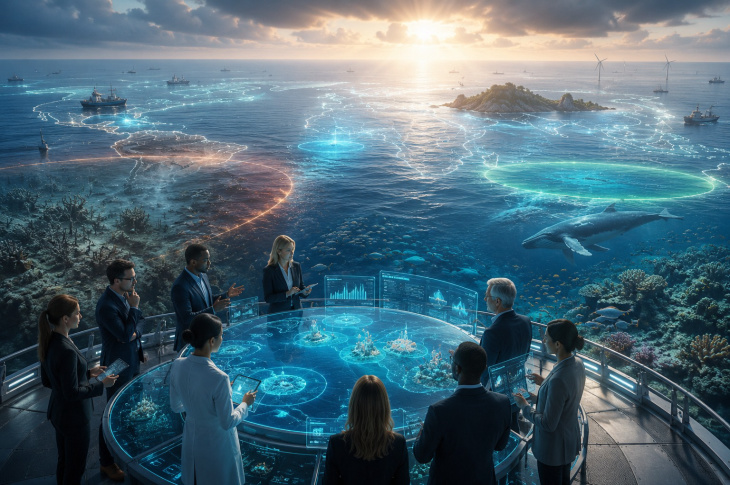


The High Seas Treaty Explained: A New Era for Ocean Governance


Introduction – Why the High Seas Matter More Than Ever
When we think about oceans, we often imagine beaches, fishing boats, or international trade routes. But beyond national coastlines lies a massive, largely invisible world called the high seas—areas of the ocean that do not belong to any single country.
These waters cover nearly two-thirds of the global ocean and play a crucial role in regulating climate, producing oxygen, absorbing carbon dioxide, and supporting marine life. Yet for decades, they have remained loosely governed, with limited accountability and fragmented rules.
The High Seas Treaty, formally known as the Biodiversity Beyond National Jurisdiction (BBNJ) Agreement, marks a historic shift in how the world manages these ocean spaces. It introduces a common legal framework for protecting marine biodiversity in international waters.
For India and other developing nations, this treaty is not just an environmental milestone—it is a step toward fair access, global cooperation, and sustainable ocean use.
Understanding the High Seas – A Global Common Space
What Are the High Seas?
The high seas are ocean areas that lie beyond the exclusive economic zones (EEZs) of countries. In simple terms, once you are more than 200 nautical miles from a country’s coastline, you enter international waters.
These regions are:
-
Not owned by any country
-
Open for navigation, fishing, and research
-
Historically governed by the principle of “freedom of the seas”
The Problem with This Freedom
While freedom sounds positive, in practice it created serious challenges:
-
Overfishing by industrial fleets
-
Deep-sea mining without environmental safeguards
-
Plastic and chemical pollution
-
Lack of accountability for damage
-
Unequal access to marine resources
For years, the high seas became a “no man’s responsibility zone,” where exploitation often exceeded conservation.
What Is the High Seas Treaty (BBNJ Agreement)?
The High Seas Treaty is a legally binding international agreement adopted under the United Nations framework. Its main goal is to ensure the conservation and sustainable use of marine biodiversity in areas beyond national jurisdiction.
In practical terms, it creates rules for:
-
Protecting marine ecosystems
-
Regulating ocean-based economic activities
-
Sharing benefits from marine genetic resources
-
Conducting environmental assessments
-
Promoting scientific cooperation
Why This Treaty Is Historic
This is the first time the global community has agreed on a comprehensive legal structure for the high seas. Earlier, only scattered treaties existed for fishing, shipping, or pollution—but there was no unified system.
Now, the ocean is no longer treated as an unregulated frontier.
Why the Treaty Was Needed – The Environmental Crisis
1. Ocean under Stress
Scientific studies show alarming trends:
-
Coral reefs are bleaching rapidly
-
Fish stocks are declining due to overfishing
-
Deep-sea ecosystems are being disturbed
-
Ocean temperatures are rising due to climate change
2. Climate Regulation at Risk
The ocean absorbs nearly 30% of global carbon emissions. When it becomes damaged, climate change accelerates.
3. Limited Protection Before the Treaty
Before this agreement, less than 1% of the high seas were protected. This created a massive governance gap.
Real-Life Example
Consider industrial fishing fleets operating in international waters near the Pacific. Without strict rules, some areas were overfished to the point where local marine populations collapsed, affecting food chains across oceans.
Key Objectives of the High Seas Treaty
The treaty focuses on four major pillars that together redefine ocean governance.
1. Marine Genetic Resources – Sharing Ocean Wealth
One of the most important features of the treaty is its approach to marine genetic resources (MGRs).
What Are Marine Genetic Resources?
These are biological materials found in marine organisms, such as:
-
Enzymes from deep-sea bacteria
-
Compounds used in medicines
-
Genes with industrial or agricultural applications
Why They Matter
Scientists and pharmaceutical companies use these resources to develop:
-
Life-saving drugs
-
Anti-cancer compounds
-
Industrial biotechnology solutions
The Problem Before
Earlier, only developed countries with advanced technology could access and benefit from these resources. This created inequality.
What the Treaty Changes
The treaty introduces the principle that:
Marine genetic resources beyond national jurisdiction are a shared resource for all humanity.
It also ensures:
-
Fair sharing of benefits
-
Access to scientific data
-
Inclusion of developing countries
Practical Impact
For countries like India, this opens opportunities in marine biotechnology, research partnerships, and fair participation in global ocean science.
2. Marine Protected Areas (MPAs)
What Are MPAs?
Marine Protected Areas are zones where human activity is regulated or restricted to protect biodiversity.
Why They Matter
They help:
-
Restore fish populations
-
Protect coral reefs and deep-sea ecosystems
-
Preserve breeding grounds for marine species
The 30x30 Global Goal
The world aims to protect 30% of oceans by 2030. The High Seas Treaty provides the legal mechanism to create MPAs in international waters.
Example Scenario
Imagine a deep-sea region rich in rare marine species. Without protection, it could be damaged by mining or fishing. With an MPA, activities can be limited, allowing ecosystems to recover naturally.
3. Environmental Impact Assessments (EIA)
What Is an EIA?
An Environmental Impact Assessment evaluates the potential harm of an activity before it begins.
Why It Matters for Oceans
Activities like:
-
Deep-sea mining
-
Large-scale fishing
-
Offshore infrastructure
can cause irreversible damage.
What the Treaty Requires
Before starting such projects, countries must:
-
Assess environmental risks
-
Consider long-term ecological effects
-
Explore safer alternatives
-
Share findings transparently
Key Shift in Thinking
The treaty introduces the precautionary principle:
“If the impact is uncertain but potentially serious, proceed with caution or avoid harm.”
This is a major change from earlier “exploit first, regulate later” approaches.
4. Technology Transfer and Capacity Building
The Inequality Problem
Ocean exploration has traditionally been dominated by developed nations with advanced technology.
What the Treaty Does
It promotes:
-
Sharing of marine research technology
-
Training for developing countries
-
Access to scientific data
-
Collaborative research programs
Why This Matters for India
India, with its long coastline and growing blue economy ambitions, can benefit from:
-
Better deep-sea research capabilities
-
Improved marine conservation tools
-
Participation in global ocean governance
Governance Structure of the Treaty
The treaty introduces a structured system for decision-making and implementation.
1. Conference of the Parties (COP)
This is the main decision-making body where countries:
-
Review progress
-
Adopt new measures
-
Resolve disputes
2. Secretariat
An administrative body that supports coordination and implementation.
3. Scientific and Technical Bodies
These groups provide expert advice on marine science and policy.
Why This Structure Matters
It ensures that ocean governance is:
-
Transparent
-
Collaborative
-
Based on scientific evidence
How the Treaty Links to Global Goals
The High Seas Treaty directly supports:
1. Sustainable Development Goal 14
Life Below Water – protecting oceans and marine resources.
2. Climate Action Goals
Healthy oceans help reduce carbon emissions and regulate temperature.
3. Biodiversity Protection Targets
It addresses global biodiversity loss, one of the biggest environmental challenges today.
Challenges in Implementation
While the treaty is powerful on paper, real-world implementation is complex.
1. Enforcement Issues
There is no global “police force” for the ocean. Enforcement depends on:
-
National cooperation
-
Satellite monitoring
-
Data sharing
2. Funding Gaps
Developing countries may need financial support for:
-
Research
-
Monitoring systems
-
Technology upgrades
3. Political Differences
Countries may disagree on:
-
Fishing rights
-
Resource sharing
-
Protected zones
4. Compliance Monitoring
Ensuring that all countries follow the rules will require strong global coordination.
Real-World Impact – What Changes for People?
For Fishermen
Better fish stock management in the long term.
For Scientists
Improved access to international research data.
For Developing Countries
More equal participation in ocean-related economic opportunities.
For Climate Policy
Stronger protection of a major climate regulator—the ocean.
Why the High Seas Treaty Is a Turning Point
This treaty represents a shift in global thinking:
-
From exploitation → to conservation
-
From competition → to cooperation
-
From inequality → to shared benefit
It recognizes a simple truth:
The ocean does not belong to one nation—it sustains all life on Earth.
Future Outlook – What Lies Ahead?
The success of the treaty will depend on:
-
Strong political will
-
Scientific collaboration
-
Public awareness
-
Effective monitoring systems
If implemented properly, it could lead to:
-
Healthier oceans
-
Stabilized marine ecosystems
-
Fairer access to ocean resources
-
Stronger climate resilience
Conclusion – A New Chapter for Humanity and the Ocean
The High Seas Treaty is more than just an international agreement—it is a global commitment to rethink humanity’s relationship with the ocean.
For the first time, the world has agreed that the high seas are not a free-for-all zone but a shared responsibility. This shift is crucial at a time when environmental pressures are intensifying and marine ecosystems are under threat.
For India and the rest of the world, the treaty offers both an opportunity and a responsibility—to protect, to collaborate, and to ensure that ocean resources are used wisely and fairly.
In the coming decades, the success of this treaty will be measured not just by legal frameworks, but by the health of the oceans themselves.
The message is clear:
The future of the planet is deeply connected to the future of the oceans—and the High Seas Treaty is a major step toward protecting both.
Frequently asked questions
What is the High Seas Treaty in simple terms?
What is the High Seas Treaty in simple terms?
The High Seas Treaty, also known as the BBNJ Agreement, is a global legal framework that helps protect marine life in international waters. It ensures that oceans beyond national borders are used sustainably and that marine biodiversity is conserved for future generations.
Why was the High Seas Treaty needed?
Why was the High Seas Treaty needed?
It was needed because the high seas were largely unregulated, leading to overfishing, pollution, and damage to fragile marine ecosystems. Before the treaty, there was no strong global system to protect biodiversity in areas outside national control.
What are Marine Protected Areas (MPAs) under the treaty?
What are Marine Protected Areas (MPAs) under the treaty?
MPAs are special zones in the high seas where human activities like fishing or mining may be restricted or regulated. Their purpose is to protect ecosystems, restore marine species, and support global conservation goals like protecting 30% of oceans by 2030.
How does the treaty benefit developing countries like India?
How does the treaty benefit developing countries like India?
The treaty promotes fair sharing of marine genetic resources, access to ocean technology, and scientific cooperation. This allows developing countries like India to participate more actively in marine research and benefit from ocean-based innovations.
Is the High Seas Treaty legally binding?
Is the High Seas Treaty legally binding?
Yes, it is a legally binding international agreement. However, its effectiveness depends on how well countries implement it through national laws, cooperation, monitoring systems, and enforcement mechanisms.

Online Consultation


Online Consultations


Trending
Frequently asked questions
What is the High Seas Treaty in simple terms?
What is the High Seas Treaty in simple terms?
The High Seas Treaty, also known as the BBNJ Agreement, is a global legal framework that helps protect marine life in international waters. It ensures that oceans beyond national borders are used sustainably and that marine biodiversity is conserved for future generations.
Why was the High Seas Treaty needed?
Why was the High Seas Treaty needed?
It was needed because the high seas were largely unregulated, leading to overfishing, pollution, and damage to fragile marine ecosystems. Before the treaty, there was no strong global system to protect biodiversity in areas outside national control.
What are Marine Protected Areas (MPAs) under the treaty?
What are Marine Protected Areas (MPAs) under the treaty?
MPAs are special zones in the high seas where human activities like fishing or mining may be restricted or regulated. Their purpose is to protect ecosystems, restore marine species, and support global conservation goals like protecting 30% of oceans by 2030.
How does the treaty benefit developing countries like India?
How does the treaty benefit developing countries like India?
The treaty promotes fair sharing of marine genetic resources, access to ocean technology, and scientific cooperation. This allows developing countries like India to participate more actively in marine research and benefit from ocean-based innovations.
Is the High Seas Treaty legally binding?
Is the High Seas Treaty legally binding?
Yes, it is a legally binding international agreement. However, its effectiveness depends on how well countries implement it through national laws, cooperation, monitoring systems, and enforcement mechanisms.
Online Consultations


Ask a Lawyer