


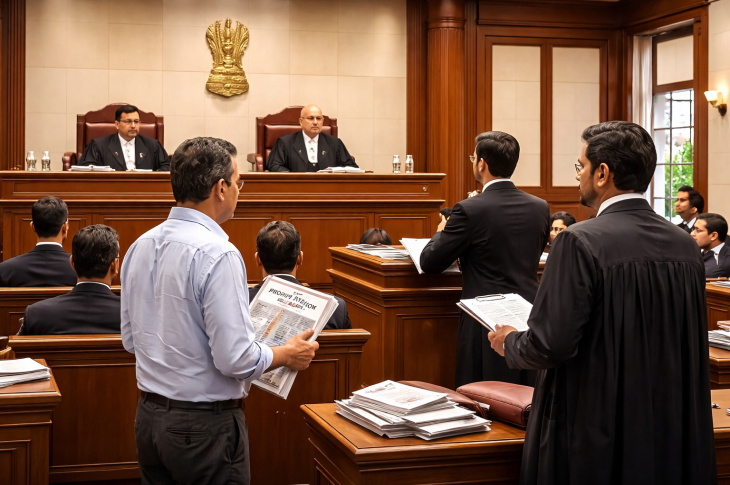


SARFAESI Auction Not Final If Payment Made After Deadline: Supreme Court Upholds Borrower’s Right of Redemption


The right to save one’s property from being sold in an auction is one of the most critical protections available to borrowers under Indian law. In a significant and borrower-friendly judgment, the Supreme Court of India clarified an important legal principle:
If the auction purchaser fails to pay the balance amount within the legally prescribed timeline, the sale does not become final—and the borrower’s right of redemption continues.
This ruling has far-reaching implications for borrowers, banks, auction purchasers, and legal practitioners dealing with recovery proceedings under the Securitisation and Reconstruction of Financial Assets and Enforcement of Security Interest Act, 2002 (commonly known as the SARFAESI Act).
Understanding the Core Issue: When Does a SARFAESI Auction Become Final?
Before diving into the judgment, it is important to understand the central legal question:
Does an auction automatically become final once the property is sold?
Or does the buyer have to complete payment within a fixed deadline for the sale to be legally valid?
The Supreme Court clarified:
A SARFAESI auction is not final unless the entire sale consideration is paid within the statutory timeline.
If the payment is delayed—even slightly—the sale may remain legally incomplete (called “inchoate” in legal terms).
This means:
-
The borrower may still reclaim the property
-
The bank cannot legally transfer ownership
-
The auction purchaser may lose rights to the property
What Is the Right of Redemption Under the SARFAESI Act?
Simple Definition
The right of redemption means:
A borrower can recover their mortgaged property by paying the full outstanding loan amount before the sale becomes final.
This right is a fundamental protection under property and banking laws in India.
Why the Right of Redemption Matters in Real Life
Consider this practical scenario:
Example
Ramesh takes a home loan of ₹40 lakh.
Due to financial difficulties, he defaults.
The bank auctions his property.
Later, Ramesh manages to arrange funds and pays the entire outstanding loan.
If the auction process is not legally complete, he can:
-
Stop the sale
-
Recover ownership
-
Continue using the property
This is exactly what the Supreme Court protected in the recent judgment.
Brief Overview of the Case
Background Facts
A business entity took a loan from a nationalized bank.
Key timeline:
-
Loan amount: Around ₹4 crore
-
Default occurred
-
Loan account classified as Non-Performing Asset (NPA)
-
Bank initiated SARFAESI proceedings
-
Property was put up for auction
Three buyers participated in the auction and paid:
-
25% of the bid amount immediately
-
Remaining 75% later
However, the crucial issue was:
The remaining payment was made after the legally allowed time limit.
Meanwhile:
The borrower cleared the entire loan amount before the sale became legally final.
The Legal Timeline for Completing a SARFAESI Auction
Under the SARFAESI Rules:
Step-by-Step Payment Structure
-
25% payment: Must be paid immediately after winning the auction
-
Remaining 75% payment: Must be paid within a fixed statutory period
-
Sale confirmation: Only after full payment
-
Sale certificate issuance: Final legal transfer of property
If step 2 is delayed:
The sale may collapse legally.
The Supreme Court’s Key Legal Finding
The Supreme Court clearly stated:
Failure to deposit the remaining amount within the statutory timeline prevents the auction from becoming final.
This principle is extremely important because it establishes:
Time limits in SARFAESI auctions are mandatory—not optional.
What Does “Inchoate Sale” Mean?
In legal language, the Court described the auction as:
“Inchoate”
Simple Meaning
An inchoate sale means:
-
The sale process has started
-
But it is not legally complete
-
Ownership has not transferred
The Court’s Reasoning Explained in Simple Terms
The Court focused on three critical factors:
1. Statutory Timelines Must Be Followed
The law sets strict deadlines.
If the buyer fails to pay on time:
-
The sale remains incomplete
-
The bank cannot finalize ownership
2. Delay Benefits the Borrower
The Court emphasized:
If payment is delayed, the borrower gets the benefit—not the buyer.
This protects borrowers from losing property unfairly.
3. Property Cannot Be Taken Without Legal Compliance
The Court reinforced a fundamental principle:
No person can be deprived of property unless the legal process is strictly followed.
Why This Judgment Is So Important for Borrowers
This ruling strengthens borrower protections in several ways.
Key Benefits for Borrowers
-
Protects property rights
-
Prevents unfair auctions
-
Encourages banks to follow procedures
-
Gives borrowers a final opportunity to repay loans
Why This Judgment Matters for Banks
Banks must now be more careful when conducting auctions.
New Compliance Expectations
Banks must:
-
Monitor payment deadlines strictly
-
Avoid issuing sale certificates prematurely
-
Ensure legal procedures are followed
Failure to do so may lead to:
-
Litigation
-
Sale cancellation
-
Financial losses
Why Auction Buyers Must Pay Attention
Auction purchasers often assume:
Winning the auction means ownership is guaranteed.
This judgment proves that assumption is incorrect.
Risks for Auction Buyers
If payment is delayed:
-
The sale may be cancelled
-
The property may revert to the borrower
-
The buyer may lose investment opportunities
Legal Rules Governing SARFAESI Auctions
The Court interpreted several important rules under the SARFAESI framework.
These rules define:
-
Payment deadlines
-
Sale confirmation
-
Borrower rights
Rule on Payment Deadline
The law requires:
The balance sale amount must be paid within the prescribed time limit.
If not:
The sale becomes invalid.
Rule on Sale Certificate
A sale certificate is issued only after:
-
Full payment
-
Legal compliance
Without these:
The certificate has no legal value.
Rule on Borrower’s Right of Redemption
The borrower retains the right to reclaim property until:
The sale is legally completed.
When Does the Right of Redemption End?
This is one of the most frequently asked questions.
The Right Ends Only When:
All three conditions are satisfied:
-
Full payment completed on time
-
Sale confirmed
-
Sale certificate issued
If any step is incomplete:
The borrower can still redeem the property.
Real-Life Scenario: Understanding the Judgment
Scenario 1: Payment Delayed
A property is auctioned.
Buyer pays 25%.
Buyer delays remaining payment.
Borrower clears loan before payment completion.
Result:
Borrower keeps the property.
Scenario 2: Payment Completed on Time
Buyer pays full amount within deadline.
Sale confirmed.
Borrower pays later.
Result:
Borrower cannot reclaim property.
Role of Courts in SARFAESI Disputes
Courts play a crucial role in ensuring fairness.
They examine:
-
Timeline compliance
-
Procedural errors
-
Borrower conduct
-
Bank actions
Why the Court Focused on Chronology
The Supreme Court emphasized:
The sequence of events determines the outcome.
This means courts carefully analyze:
-
Who delayed payment
-
Why the delay occurred
-
Whether the borrower acted responsibly
Judicial Intervention and Its Impact
Sometimes courts issue interim orders.
These orders may:
-
Pause auctions
-
Delay payment timelines
-
Prevent sale confirmation
In such cases:
The delay may not be the borrower’s fault.
Key Legal Principle Established by the Judgment
The Court established a clear legal rule:
A sale that violates statutory timelines cannot be used to deprive a borrower of property.
This principle strengthens:
-
Property rights
-
Procedural fairness
-
Legal certainty
Practical Lessons for Borrowers
This judgment offers several actionable insights.
What Borrowers Should Do Immediately
-
Monitor auction notices
-
Track payment deadlines
-
Keep communication records
-
Arrange funds quickly
-
Seek legal advice early
How Borrowers Can Protect Their Property
Step-by-Step Strategy
Step 1
Check loan status regularly.
Step 2
Respond to bank notices promptly.
Step 3
Request payment statements.
Step 4
Pay outstanding dues before sale completion.
Step 5
File legal challenge if procedures are violated.
Warning Signs That an Auction May Be Invalid
Borrowers should watch for:
-
Payment delays by buyers
-
Missing notices
-
Incorrect valuation
-
Improper auction procedure
-
Sale confirmation without full payment
Practical Lessons for Banks
Banks must ensure strict compliance with legal rules.
Best Practices for Banks
-
Follow statutory timelines
-
Maintain accurate records
-
Verify payment completion
-
Issue sale certificates only after compliance
-
Train staff on SARFAESI procedures
Practical Lessons for Auction Buyers
Auction buyers must treat payment deadlines as non-negotiable.
Smart Steps for Buyers
-
Arrange funds before bidding
-
Understand payment deadlines
-
Verify auction rules
-
Consult legal experts
-
Complete payment on time
Common Mistakes in SARFAESI Auctions
Mistake 1
Assuming the auction is final immediately.
Mistake 2
Ignoring payment deadlines.
Mistake 3
Delaying payment due to litigation.
Mistake 4
Issuing sale certificate prematurely.
Mistake 5
Failing to monitor court orders.
Impact of the Judgment on Future SARFAESI Cases
This decision will influence:
-
Banking litigation
-
Property auctions
-
Debt recovery cases
Expected Legal Changes
We may see:
-
Stricter compliance requirements
-
More borrower challenges
-
Increased judicial scrutiny
-
Improved procedural transparency
Key Takeaways from the Judgment
The Most Important Legal Points
-
Payment deadlines are mandatory
-
Delayed payment prevents sale finalization
-
Borrower retains right of redemption
-
Sale certificate requires full compliance
-
Courts prioritize procedural fairness
Final Thoughts: Strengthening Borrower Rights in India
The ruling by the Supreme Court of India reinforces a powerful message:
Property cannot be taken away unless every legal requirement is strictly followed.
This judgment protects:
-
Homeowners
-
Businesses
-
Borrowers
-
Property rights
For borrowers facing SARFAESI action, the message is clear:
Even after an auction, your property may still be recoverable—if the legal process is incomplete.
For banks and buyers, the lesson is equally clear:
Deadlines matter. Compliance matters. Procedure matters.
If you are dealing with a SARFAESI notice, auction, or property dispute, early legal guidance can make a decisive difference.
Download the Judgment Here:
Supreme Court JudgmentFrequently asked questions
Is the sale certificate always final?
Is the sale certificate always final?
No.
A sale certificate is valid only if:
- Payment is completed on time
- Legal procedures are followed
Can a borrower stop a SARFAESI auction after the auction is completed?
Can a borrower stop a SARFAESI auction after the auction is completed?
Yes.
If the buyer has not paid the full amount within the legal deadline, the borrower may still reclaim the property.
Can the bank issue a sale certificate without full payment?
Can the bank issue a sale certificate without full payment?
No.
Doing so may make the sale legally invalid.
What happens if the buyer pays late?
What happens if the buyer pays late?
The sale may:
- Remain incomplete
- Be cancelled
- Allow borrower redemption
Can courts cancel an auction sale?
Can courts cancel an auction sale?
Yes.
Courts can cancel the sale if:
- Legal procedures are violated
- Timelines are ignored
- Borrower rights are affected

Online Consultation


Online Consultations


Trending
Frequently asked questions
Is the sale certificate always final?
Is the sale certificate always final?
No.
A sale certificate is valid only if:
- Payment is completed on time
- Legal procedures are followed
Can a borrower stop a SARFAESI auction after the auction is completed?
Can a borrower stop a SARFAESI auction after the auction is completed?
Yes.
If the buyer has not paid the full amount within the legal deadline, the borrower may still reclaim the property.
Can the bank issue a sale certificate without full payment?
Can the bank issue a sale certificate without full payment?
No.
Doing so may make the sale legally invalid.
What happens if the buyer pays late?
What happens if the buyer pays late?
The sale may:
- Remain incomplete
- Be cancelled
- Allow borrower redemption
Can courts cancel an auction sale?
Can courts cancel an auction sale?
Yes.
Courts can cancel the sale if:
- Legal procedures are violated
- Timelines are ignored
- Borrower rights are affected
Online Consultations


Ask a Lawyer