
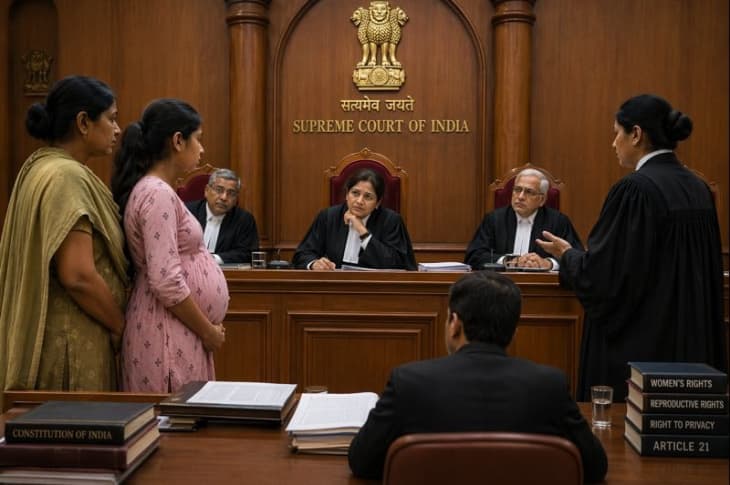
The recent judgment of the Supreme Court of India marks a significant moment in the evolution of reproductive rights and child welfare laws in India. In a sensitive and complex case involving a minor who was more than seven months pregnant, the Court reaffirmed a powerful constitutional principle: a pregnant woman’s choice and dignity must remain the central consideration, even when difficult moral and medical questions arise.
This decision is not only about one minor’s situation—it reflects broader themes of bodily autonomy, mental health, child protection, and constitutional liberty. It also sends a strong message to courts, doctors, parents, and policymakers about how to handle late-stage pregnancy termination requests, especially when minors are involved.
Understanding the Case: Why the Supreme Court Allowed Termination
The case involved a 15-year-old girl who had become pregnant following a relationship with another minor. By the time the matter reached the court, the pregnancy had progressed beyond the standard legal time limit for termination.
The minor clearly expressed her unwillingness to continue the pregnancy. Medical reports indicated that she was suffering from severe psychological distress, and her education and daily life had been significantly disrupted.
The authorities initially suggested alternatives such as:
- Allowing the pregnancy to continue
- Placing the child for adoption after birth
- Providing financial support to the family
However, the Court emphasized that these options cannot override the personal choice and well-being of the pregnant individual.
Key Message from the Court
The Court made it clear that:
- A woman or minor cannot be forced to carry an unwanted pregnancy
- Adoption is not a substitute for reproductive autonomy
- The mental and emotional health of the pregnant person must be prioritized
- Courts must act to prevent unsafe or illegal abortions
Ultimately, the Court permitted the termination to be carried out in a government hospital under strict medical supervision.
Why This Judgment Is So Important for Women’s Rights in India
This ruling strengthens the legal recognition of reproductive autonomy as a fundamental right under the Constitution of India.
Reproductive Autonomy Is a Constitutional Right
The Court reiterated that reproductive choice is protected under Article 21, which guarantees:
- Right to life
- Right to personal liberty
- Right to privacy
- Right to dignity
This means decisions about pregnancy are not merely medical—they are constitutional matters.
Practical Impact on Society
This judgment will influence:
- Future abortion cases involving minors
- Medical decision-making in late-stage pregnancies
- Interpretation of the Medical Termination of Pregnancy law
- Protection of mental health rights
It also encourages a more compassionate and realistic approach to complex reproductive situations.
What the Medical Termination of Pregnancy (MTP) Act Says
To understand the significance of the decision, it is important to know the legal framework governing abortion in India.
Legal Time Limits Under the MTP Act
Under the Medical Termination of Pregnancy Act, 1971 (as amended in 2021):
Up to 20 weeks:
- Termination allowed with the opinion of one registered medical practitioner
20 to 24 weeks:
- Allowed for certain categories of women, including minors
- Requires the opinion of two doctors
Beyond 24 weeks:
- Allowed only in exceptional circumstances
- Requires approval from a court or medical board
These limits exist to balance:
- Safety of the pregnant person
- Viability of the fetus
- Ethical considerations
However, the law also recognizes that rigid time limits cannot address every real-life situation.
Why Courts Sometimes Allow Abortion Beyond the Legal Limit
In exceptional cases, courts may permit termination after the statutory period has expired.
Common Reasons for Late-Term Termination Requests
- Severe fetal abnormalities
- Risk to the mother’s life
- Pregnancy resulting from sexual assault
- Mental health risks
- Pregnancy involving minors
- Delayed discovery of pregnancy
In this case, the Court found that forcing the minor to continue the pregnancy would cause:
- Long-term psychological trauma
- Educational disruption
- Social stigma
- Health risks
Therefore, judicial intervention became necessary.
The Role of Mental Health in Pregnancy Decisions
One of the most important aspects of this judgment is the recognition of mental health as a decisive factor in abortion decisions.
Psychological Distress Can Be a Valid Ground
The Court acknowledged that an unwanted pregnancy can lead to:
- Anxiety and depression
- Social isolation
- Suicidal thoughts
- Emotional trauma
Ignoring these factors can have lifelong consequences.
Real-Life Example
Consider a 16-year-old student who becomes pregnant unexpectedly.
If she is forced to continue the pregnancy:
- She may drop out of school
- She may face social stigma
- Her mental health may deteriorate
- Her future career prospects may be affected
Allowing termination in such cases can protect:
- Education
- Emotional well-being
- Personal dignity
This is why courts increasingly consider mental health as seriously as physical health.
Why Adoption Cannot Replace a Woman’s Choice
A central issue in the case was whether adoption could be used as an alternative to abortion.
The Court firmly rejected this idea.
Key Legal Principle
Adoption is a solution for child care—not a substitute for bodily autonomy.
Even if a child can be placed for adoption:
- The pregnant person still has to carry the pregnancy
- The physical risks remain
- The emotional burden continues
- The social impact persists
Therefore, adoption cannot be forced as a default option.
Special Protection for Minors in Pregnancy Cases
Minors are considered a vulnerable group under Indian law.
Why Minors Need Extra Protection
They often face:
- Lack of awareness
- Limited decision-making capacity
- Social pressure
- Emotional vulnerability
- Educational disruption
In such situations, courts adopt a child-centric approach that prioritizes long-term welfare.
Legal Safeguards for Minors
When a minor seeks termination:
- Consent of a guardian is required
- Medical evaluation is mandatory
- Privacy must be protected
- Psychological support may be provided
The recent judgment reinforces these safeguards.
The Risk of Unsafe Abortions: A Serious Public Health Concern
One of the Court’s warnings in the case was about the dangers of denying legal termination.
What Happens When Legal Access Is Denied
Many individuals may resort to:
- Unlicensed clinics
- Unsafe medical procedures
- Self-administered abortion methods
- Illegal drugs
These practices can lead to:
- Severe infection
- Permanent infertility
- Organ damage
- Death
Why Legal Access Saves Lives
Allowing safe, regulated termination:
- Reduces maternal mortality
- Protects reproductive health
- Prevents criminal exploitation
- Ensures medical supervision
This is why courts often intervene to prevent unsafe outcomes.
How the Court Balanced Medical Risk and Personal Choice
Late-stage pregnancy termination carries medical risks. Doctors must carefully evaluate:
- Gestational age
- Health of the pregnant person
- Fetal condition
- Risk of complications
In the case, medical experts informed the Court about potential risks. However, the Court concluded that:
The minor understood the risks and still chose termination.
Respecting informed consent is a fundamental principle of medical ethics.
The Importance of Privacy in Sensitive Cases
Privacy is a crucial aspect of reproductive rights.
Legal Protection of Privacy
Indian courts recognize privacy as a fundamental right.
This means:
- Identity of the minor must be confidential
- Medical records must be protected
- Court proceedings may be anonymized
Protecting privacy encourages victims to seek help without fear of stigma.
How This Judgment Will Influence Future Cases
This decision will serve as an important legal precedent.
Expected Legal Impact
Courts are likely to:
- Prioritize the pregnant person’s choice
- Consider mental health more seriously
- Allow termination in exceptional cases
- Focus on dignity and autonomy
Healthcare providers may also:
- Provide better counseling
- Respect patient decisions
- Improve access to safe services
What Families Should Do in Similar Situations
If a minor becomes pregnant and wishes to terminate the pregnancy, families should act quickly and responsibly.
Step-by-Step Guidance
- Seek immediate medical consultation
- Inform a parent or guardian
- Obtain medical evaluation
- Consult a legal professional if needed
- Approach a court if the pregnancy exceeds legal limits
Early action increases the chances of safe and legal termination.
Practical Legal Advice for Parents and Guardians
Parents often feel confused or overwhelmed in such situations.
Here are practical steps to follow:
Do
- Stay calm and supportive
- Prioritize the child’s mental health
- Seek professional medical advice
- Protect the minor’s privacy
- Follow legal procedures
Avoid
- Forcing the child to continue pregnancy
- Delaying medical consultation
- Ignoring psychological distress
- Seeking unsafe abortion methods
Supportive parenting can make a significant difference in recovery and well-being.
Responsibilities of Doctors and Hospitals
Healthcare providers play a crucial role in protecting reproductive rights.
Legal Duties of Medical Professionals
Doctors must:
- Provide accurate medical information
- Assess physical and mental health risks
- Maintain confidentiality
- Follow legal guidelines
- Obtain informed consent
Failure to comply can lead to:
- Medical negligence claims
- Criminal liability
- Professional disciplinary action
Ethical Considerations in Late-Term Abortion Cases
Late-stage pregnancy termination raises complex ethical questions.
Key Ethical Principles
- Autonomy
- Beneficence
- Non-maleficence
- Justice
Courts must balance:
- Medical safety
- Personal freedom
- Social responsibility
The recent judgment shows how these principles can be applied compassionately.
Broader Social Lessons from the Judgment
This case highlights several important social realities.
Key Takeaways
- Reproductive rights are human rights
- Mental health deserves equal attention
- Minors need compassionate support
- Legal systems must adapt to real-life situations
- Safe medical care prevents tragedy
The judgment encourages society to move away from stigma and toward empathy.
The Future of Reproductive Rights in India
India’s legal system is gradually evolving toward greater recognition of personal autonomy.
Emerging Trends
We are likely to see:
- Expanded access to reproductive healthcare
- Stronger privacy protections
- Greater focus on mental health
- More flexible interpretation of abortion laws
These changes reflect a growing understanding of individual dignity and freedom.
Final Thoughts: A Landmark Step Toward Compassionate Justice
The Supreme Court’s decision to allow termination of an unwanted pregnancy for a minor sends a powerful message:
The dignity, health, and choice of the pregnant individual must always come first.
This ruling reinforces the idea that laws should serve people—not the other way around. By prioritizing autonomy, mental health, and safety, the Court has set a humane and practical standard for handling sensitive reproductive cases.
For families, healthcare providers, and legal professionals, the lesson is clear:
Compassion, timely action, and respect for personal choice are essential in protecting the rights and well-being of vulnerable individuals.
Comments
Commenting as Guest