


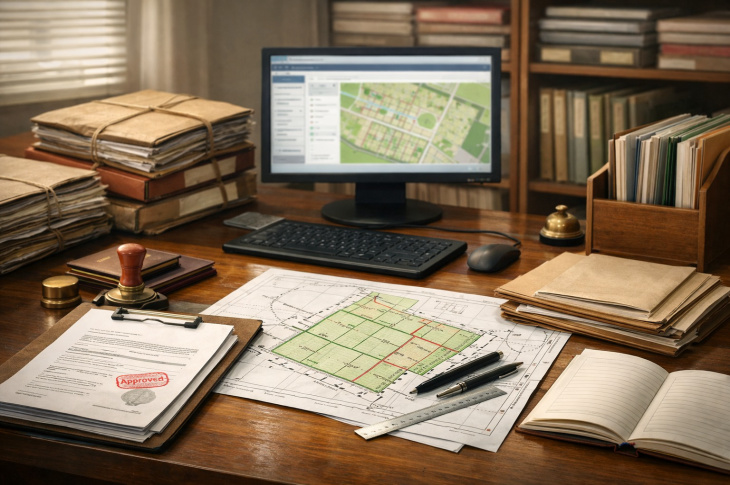


Top 5 Common Reasons for Patta Chitta Rejection in Tamil Nadu


Patta Chitta is one of the most important land records in Tamil Nadu. It serves as official proof of ownership, land classification, and revenue compliance. Whether you are purchasing property, inheriting ancestral land, applying for a home loan, or planning a resale, a valid Patta Chitta is critical.
Despite this, Patta Chitta applications are frequently rejected. This often causes panic among landowners and buyers. However, the reality is reassuring—most Patta Chitta rejections are procedural and temporary, not permanent.
In almost every case, rejection simply means that some data mismatch, missing compliance, or documentation gap must be corrected. Once rectified, approval is very much achievable.
Why Do Patta Chitta Applications Get Rejected?
Patta Chitta approval depends on three core factors:
-
Accuracy of land details such as survey number, extent, and boundaries
-
Clear and continuous ownership records
-
Full compliance with government dues and survey requirements
If even one of these factors is missing or inconsistent, the application is likely to be rejected. Let us now examine the most common reasons in detail.
1. Survey Number Mismatch
Why does a survey number mismatch lead to Patta Chitta rejection?
Survey number mismatch is the single most common reason for Patta Chitta rejection. A survey number is the unique identity of a land parcel in revenue records. If the survey number mentioned in your Sale Deed does not exactly match the government revenue database, the application is automatically rejected.
Even a minor mismatch—such as a wrong digit or missing subdivision—can trigger rejection.
Common causes of survey number mismatch
-
Typographical errors in registered Sale Deeds
-
Use of old survey numbers instead of updated resurvey numbers
-
Incorrect subdivision references (for example, 100/1 instead of 100/1A)
-
Land subdivisions or mergers not reflected in old documents
This issue is especially common in rapidly developing areas where large plots were divided into residential layouts over time.
How to fix survey number mismatch
-
Obtain the Field Measurement Book (FMB) sketch from the local survey office or online portal
-
Compare the survey details in your Sale Deed with current revenue records
-
Identify the exact point where the mismatch occurs
-
Submit a correction or grievance application through the Taluk office or Tamil Nadu e-Services portal
-
Attach supporting documents such as the parent deed, FMB sketch, and ID proof
-
Follow up with the Village Administrative Officer (VAO) for verification
Early consultation with revenue officials can significantly reduce correction time.
2. Unpaid Government Dues and Taxes
How do unpaid dues cause Patta Chitta rejection?
Patta Chitta not only confirms ownership but also verifies that the land is compliant with government obligations. If any government dues are pending, the system flags the application during verification.
Modern digital systems link land records with tax databases, making it impossible to bypass unpaid dues.
Common types of unpaid dues
-
Land Revenue Tax (Kist) payable annually to the Revenue Department
-
Local body taxes payable to municipalities or panchayats
-
Water cess applicable to certain agricultural lands
-
Agricultural-to-residential land conversion charges
This problem is particularly common in inherited or vacant properties where previous owners may have skipped tax payments for several years.
How to fix unpaid dues-related rejection
-
Check pending dues at the VAO office or relevant online tax portal
-
Pay all outstanding amounts immediately
-
Collect official stamped receipts for each payment
-
Upload these receipts during Patta reapplication or reply to the query
-
Reapply once the system reflects updated payment status
Impact of unpaid dues on approval
-
Land tax arrears usually result in automatic rejection
-
Local body dues often put applications on hold
-
Conversion charges lead to conditional rejection until paid
Clearing dues early improves both approval chances and resale value.
3. Incomplete or Outdated Land Surveys
Can incomplete land surveys stop Patta Chitta approval?
Yes. Incomplete or outdated land surveys are a major reason for rejection. If boundaries or measurements do not match official records, revenue authorities cannot issue a new Patta Chitta.
Many rural and peri-urban lands were last surveyed decades ago. Over time, roads, layouts, and encroachments may have altered the ground reality.
Warning signs of survey-related problems
-
Boundary disputes with neighboring landowners
-
Plot size mismatch between Sale Deed and actual site
-
Missing or damaged pages in the Field Measurement Book
-
Objections raised during site inspection
How to correct survey-related issues
-
Apply for a resurvey at the Taluk office
-
Pay the prescribed survey fee
-
Inform adjacent landowners before the site visit
-
Be present during the government surveyor’s inspection
-
Ensure boundaries and measurements are properly recorded
-
Wait for the surveyor’s report to be submitted to the Tahsildar
-
Once updated, reapply for Patta Chitta
Although time-consuming, a completed survey ensures long-term legal clarity.
4. Inheritance and Ownership Documentation Issues
Why do inheritance issues cause Patta Chitta rejection?
Patta Chitta requires a clear, uninterrupted chain of ownership. In inherited properties, rejection occurs when authorities cannot verify how ownership passed from one generation to the next.
Revenue records often continue to reflect ancestors’ names even decades later, leading to rejection when heirs apply without proper documentation.
Common ownership-related gaps
-
Missing Legal Heir Certificate
-
Unregistered family partition deeds
-
Oral or informal land division within families
-
Ongoing court disputes or stay orders
How to resolve inheritance-related rejection
-
Obtain a Legal Heir Certificate from the Tahsildar
-
Register a Partition Deed or Settlement Deed if land is divided
-
Compile the complete chain of title from the original owner to the current claimant
-
Attach death certificates, heir certificates, and registered deeds
-
Reapply once ownership records are complete
For high-value or multi-heir properties, legal guidance is strongly recommended.
5. Incorrect or Poor-Quality Document Uploads
How do document upload errors lead to rejection?
In the digital Patta Chitta system, uploaded documents are the primary basis for verification. If documents are unclear, incomplete, or incorrect, officials cannot verify ownership and must reject the application.
Common document upload mistakes
-
Uploading a Sale Agreement instead of a registered Sale Deed
-
Missing back pages containing registration stamps and signatures
-
Blurred or low-resolution scans
-
Uploading wrong or outdated Encumbrance Certificates
Best practices for document upload
-
Scan documents at a minimum resolution of 300 DPI
-
Use PDF format for all uploads
-
Ensure every page of each document is included
-
Name files clearly for easy reference
-
Double-check readability before submission
High-quality digital submissions significantly increase approval chances.
Conclusion: Patta Chitta Rejection Is a Fixable Problem
Patta Chitta rejection is frustrating but rarely final. In most cases, rejection highlights outdated records, minor mismatches, unpaid dues, or missing documentation accumulated over decades.
By understanding the top Patta Chitta rejection reasons and following the structured correction steps explained above, landowners can secure clear, dispute-free land records. A proactive approach with revenue authorities and proper documentation is the key to success.
Frequently asked questions
What are the most common Patta Chitta rejection reasons?
What are the most common Patta Chitta rejection reasons?
Survey mismatch, unpaid dues, incomplete surveys, inheritance gaps, and document upload errors.
How long does Patta correction usually take?
How long does Patta correction usually take?
Simple corrections take 2–4 weeks, while survey or inheritance cases may take several months.
Can property be sold without Patta Chitta?
Can property be sold without Patta Chitta?
Legally possible, but highly discouraged as buyers and banks usually insist on it.
Is Patta Chitta mandatory for home loans?
Is Patta Chitta mandatory for home loans?
Yes, most banks require Patta Chitta for loan approval.
Can online applications be corrected after rejection?
Can online applications be corrected after rejection?
Yes, rejected applications can be corrected and resubmitted with proper documents.
Who can help correct Patta Chitta errors?
Who can help correct Patta Chitta errors?
VAO, Taluk office officials, survey department, or experienced legal professionals.
Is legal advice necessary for inheritance cases?
Is legal advice necessary for inheritance cases?
Highly recommended for multi-heir or high-value properties.

Online Consultation


Online Consultations


Trending
Frequently asked questions
What are the most common Patta Chitta rejection reasons?
What are the most common Patta Chitta rejection reasons?
Survey mismatch, unpaid dues, incomplete surveys, inheritance gaps, and document upload errors.
How long does Patta correction usually take?
How long does Patta correction usually take?
Simple corrections take 2–4 weeks, while survey or inheritance cases may take several months.
Can property be sold without Patta Chitta?
Can property be sold without Patta Chitta?
Legally possible, but highly discouraged as buyers and banks usually insist on it.
Is Patta Chitta mandatory for home loans?
Is Patta Chitta mandatory for home loans?
Yes, most banks require Patta Chitta for loan approval.
Can online applications be corrected after rejection?
Can online applications be corrected after rejection?
Yes, rejected applications can be corrected and resubmitted with proper documents.
Who can help correct Patta Chitta errors?
Who can help correct Patta Chitta errors?
VAO, Taluk office officials, survey department, or experienced legal professionals.
Is legal advice necessary for inheritance cases?
Is legal advice necessary for inheritance cases?
Highly recommended for multi-heir or high-value properties.
Online Consultations


Ask a Lawyer