




IndiGo Crisis Explained: Why the Government Is Avoiding a Monopoly or Duopoly in Indian Aviation


Introduction: When One Airline’s Disruption Shook an Entire Industry
India’s aviation sector has witnessed rapid growth over the last decade. Affordable airfares, expanding regional connectivity, and a rising middle class have made flying accessible to millions. However, the recent IndiGo crisis, which led to large-scale flight disruptions, exposed a serious structural weakness in Indian aviation: over-dependence on one dominant airline.
The crisis was not just about delayed or cancelled flights. It became a wake-up call for policymakers, regulators, and passengers alike. Civil Aviation Minister Ram Mohan Naidu openly described the incident as a “structural warning”—a sign that India cannot afford to rely on one or two airlines to carry the bulk of its passengers.
Understanding the IndiGo Crisis: What Happened?
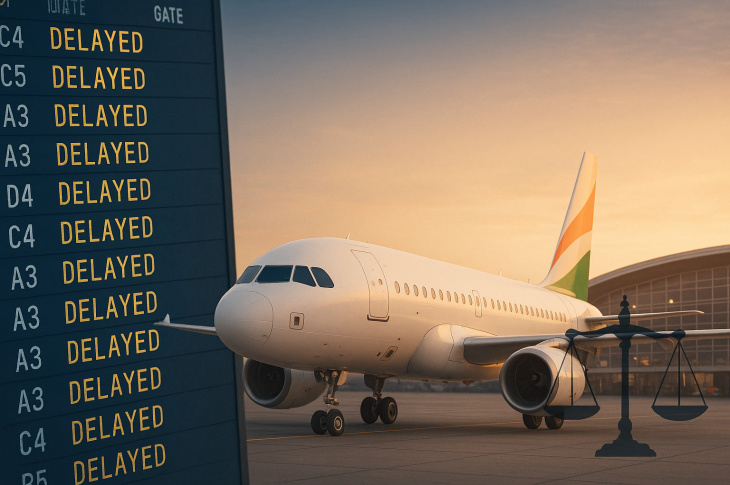
IndiGo, India’s largest airline by market share and fleet size, faced a massive operational disruption that resulted in:
-
Widespread flight delays
-
Last-minute cancellations
-
Confused communication to passengers
-
Sudden spike in ticket prices across competing airlines
Because IndiGo controls a very large share of India’s domestic air traffic, its operational issues immediately spilled over into the entire aviation ecosystem. Other airlines could not absorb the excess demand smoothly, leading to chaos across airports.
This incident demonstrated a harsh reality:
When one airline dominates the market, its failure becomes a national problem.
Why IndiGo’s Dominance Matters So Much
IndiGo’s Market Position in Indian Aviation
IndiGo operates:
-
Hundreds of aircraft
-
Thousands of daily flights
-
A dominant share of domestic passenger traffic
In many routes—especially metro to Tier-2 or Tier-3 cities—IndiGo is often the primary or sole reliable option.
This dominance means:
-
Fewer alternatives for passengers
-
Limited competitive pressure
-
High systemic risk if the airline faces technical, staffing, or management failures
The government’s concern is not about one airline’s success—but about what happens when success turns into excessive concentration of power.
What Is a Monopoly or Duopoly in Aviation?
Monopoly Explained
A monopoly exists when:
-
One company controls a major portion of the market
-
Customers have very limited alternatives
-
Prices and service quality are influenced by a single player
In aviation, monopoly can lead to:
-
Arbitrary pricing
-
Reduced accountability
-
Passenger inconvenience with little recourse
Duopoly Explained
A duopoly occurs when:
-
Two companies dominate the market
-
Competition exists in theory but not in practice
Even duopolies can result in:
-
Price alignment instead of competition
-
Lack of innovation
-
Weak consumer protection
The government wants to avoid both scenarios, which is why it has raised concerns after the IndiGo disruption.
Minister Ram Mohan Naidu’s Statement: A Clear Policy Signal
Speaking to India Today, Civil Aviation Minister Ram Mohan Naidu stated:
“We need at least five airlines with around 100 aircraft each, so the country is not dependent on one or two carriers. This is essential to avoid monopoly and duopoly.”
This statement is significant because:
-
It publicly acknowledges structural risk
-
It signals a shift towards balanced aviation growth
-
It places passenger interest above corporate dominance
Calling the IndiGo incident a “structural warning”, the minister made it clear that such concentration cannot continue unchecked.
Why Five Airlines With 100 Aircraft Each?
The Logic Behind the Number
The minister’s suggestion is not arbitrary. Having at least:
-
Five strong airlines
-
With substantial fleet strength
Would ensure:
-
Operational backup during crises
-
Better load distribution
-
Competitive pricing
-
Faster recovery during disruptions
In such a system, even if one airline faces trouble:
-
Others can absorb passenger demand
-
Airports and routes remain functional
-
Price shocks can be avoided
This is a risk-diversification strategy, similar to not depending on one bank, one telecom provider, or one power supplier.
Airfare Surge During the Crisis: Exploitation or Market Reality?
What Passengers Experienced
During the IndiGo disruption:
-
Ticket prices on other airlines surged sharply
-
Last-minute fares became unaffordable
-
Many passengers were forced to cancel travel plans
This raised a critical question:
Did airlines exploit the situation by unfairly increasing fares?
Government’s Stand on Price Manipulation
Minister Naidu clarified that the Centre is:
-
Examining fare data route-by-route
-
Assessing whether airlines acted unfairly
-
Studying whether surge pricing crossed ethical or legal limits
While airlines often argue that prices rise due to demand-supply dynamics, the government is evaluating whether:
-
The pricing was disproportionate
-
Passengers were taken advantage of during a crisis
This scrutiny is crucial because aviation is not just a business—it is a public utility in emergencies.
Why the Government Delayed Airfare Capping
One of the biggest questions raised was:
Why didn’t the government cap airfares immediately?
Minister’s Explanation
According to the Civil Aviation Minister:
-
Immediate intervention without assessment could cause market distortion
-
The government needed time to analyze:
-
Severity of disruption
-
Duration
-
Airline conduct
-
Impact on passengers
-
Airfare capping is a serious regulatory step and cannot be imposed arbitrarily. A rushed decision could:
-
Create panic
-
Lead to ticket hoarding
-
Harm airline operations
The two-day delay allowed the government to:
-
Collect data
-
Consult regulators
-
Ensure proportional response
IndiGo’s Response: Why the Government Is Not Fully Satisfied
Chairman’s Video Message Under Scrutiny
IndiGo’s chairman released a video message addressing the situation. However, Minister Naidu stated that:
-
Several key public concerns were not addressed
-
The explanation lacked clarity on accountability
-
The government was not fully satisfied
Despite regular communication with IndiGo:
-
Core operational failures remain unexplained
-
Management responsibility is still under review
This shows that the government expects transparent accountability, not just public apologies.
Travel Vouchers: Are They Enough Compensation?
IndiGo’s Travel Voucher Announcement
As part of damage control, IndiGo announced travel vouchers for affected passengers. However, the government is assessing:
-
Whether vouchers adequately compensate inconvenience
-
Whether passengers were forced into accepting them
-
If refunds or alternate remedies should have been offered
Why Vouchers May Not Be Sufficient
Travel vouchers:
-
Lock passengers into future travel with the same airline
-
Do not compensate for missed events, work losses, or emergencies
-
May expire or come with restrictions
From a consumer protection standpoint, vouchers alone may not reflect:
-
Severity of disruption
-
Passenger hardship
-
Financial and emotional losses
Can the Government Remove an Airline’s CEO?
This question also surfaced during public discussions.
Legal Reality Explained
Minister Naidu clarified:
-
Private airlines operate under corporate law
-
Government cannot arbitrarily remove CEOs
-
Any action must follow legal and procedural norms
However, he also emphasized:
-
If negligence or leadership failure is proven
-
Regulatory and corrective measures can be considered
This underscores that corporate autonomy does not mean immunity from accountability.
Aviation as Critical Infrastructure, Not Just Business
The IndiGo crisis reinforced an important truth:
Aviation is essential national infrastructure.
Airlines connect:
-
Families
-
Businesses
-
Emergency services
-
Economic hubs
When one airline dominates this infrastructure:
-
National mobility becomes vulnerable
-
Passengers lose bargaining power
-
Crisis impact multiplies
This is why governments worldwide regulate aviation more strictly than most industries.
The Larger Policy Shift: Reducing Concentration of Power
Minister Naidu described the incident as a turning point. The government is now:
-
Re-evaluating aviation policy
-
Encouraging new airline entrants
-
Supporting fleet expansion of existing smaller players
-
Strengthening regulatory oversight
The aim is not to punish success—but to balance power for long-term stability.
Lessons for the Indian Aviation Sector
The IndiGo crisis offers several critical lessons:
-
Market dominance creates systemic risk
-
Competition protects consumers
-
Operational resilience matters more than size
-
Passenger rights need stronger safeguards
-
Regulatory preparedness must match industry growth
What This Means for Passengers Going Forward
If the government’s vision is implemented successfully, passengers can expect:
-
More airline choices
-
Better pricing stability
-
Faster recovery during disruptions
-
Improved service accountability
A diversified aviation ecosystem ultimately benefits:
-
Consumers
-
The economy
-
National connectivity
Conclusion: Why Avoiding Monopoly Is Essential for India’s Aviation Future
The IndiGo crisis was not just an airline issue—it was a structural stress test for Indian aviation. The government’s response shows a clear understanding that:
-
Over-reliance on one or two airlines is dangerous
-
Market concentration weakens passenger protection
-
Sustainable growth requires multiple strong players
By advocating for at least five well-scaled airlines, the Centre is prioritizing:
-
Stability over dominance
-
Competition over convenience
-
Public interest over corporate comfort
If this moment leads to meaningful reform, the IndiGo disruption may ultimately serve a positive purpose—making Indian aviation safer, fairer, and more resilient for the future.
Frequently asked questions
What was the IndiGo crisis in Indian aviation?
What was the IndiGo crisis in Indian aviation?
The IndiGo crisis refers to a large-scale flight disruption that caused delays, cancellations, and fare spikes across India. Due to IndiGo’s dominant market share, the disruption affected the entire aviation ecosystem.
Why is the government concerned about IndiGo’s dominance?
Why is the government concerned about IndiGo’s dominance?
The government is concerned because over-dependence on one airline creates systemic risk. If a dominant airline fails operationally, passengers have limited alternatives, leading to chaos and unfair pricing.
What did the Civil Aviation Minister say about monopoly in aviation?
What did the Civil Aviation Minister say about monopoly in aviation?
Civil Aviation Minister Ram Mohan Naidu said India needs at least five airlines with around 100 aircraft each to avoid monopoly or duopoly and prevent future aviation crises.
Why were airfares not capped immediately during the crisis?
Why were airfares not capped immediately during the crisis?
The government delayed capping airfares to properly assess the situation, airline conduct, and market impact. Immediate capping without data could have caused further disruption.
How will avoiding monopoly benefit passengers?
How will avoiding monopoly benefit passengers?
A competitive aviation market ensures fair pricing, better service quality, quicker recovery during disruptions, and stronger passenger protection.

Online Consultation


Online Consultations


Trending
Frequently asked questions
What was the IndiGo crisis in Indian aviation?
What was the IndiGo crisis in Indian aviation?
The IndiGo crisis refers to a large-scale flight disruption that caused delays, cancellations, and fare spikes across India. Due to IndiGo’s dominant market share, the disruption affected the entire aviation ecosystem.
Why is the government concerned about IndiGo’s dominance?
Why is the government concerned about IndiGo’s dominance?
The government is concerned because over-dependence on one airline creates systemic risk. If a dominant airline fails operationally, passengers have limited alternatives, leading to chaos and unfair pricing.
What did the Civil Aviation Minister say about monopoly in aviation?
What did the Civil Aviation Minister say about monopoly in aviation?
Civil Aviation Minister Ram Mohan Naidu said India needs at least five airlines with around 100 aircraft each to avoid monopoly or duopoly and prevent future aviation crises.
Why were airfares not capped immediately during the crisis?
Why were airfares not capped immediately during the crisis?
The government delayed capping airfares to properly assess the situation, airline conduct, and market impact. Immediate capping without data could have caused further disruption.
How will avoiding monopoly benefit passengers?
How will avoiding monopoly benefit passengers?
A competitive aviation market ensures fair pricing, better service quality, quicker recovery during disruptions, and stronger passenger protection.
Online Consultations


Ask a Lawyer