


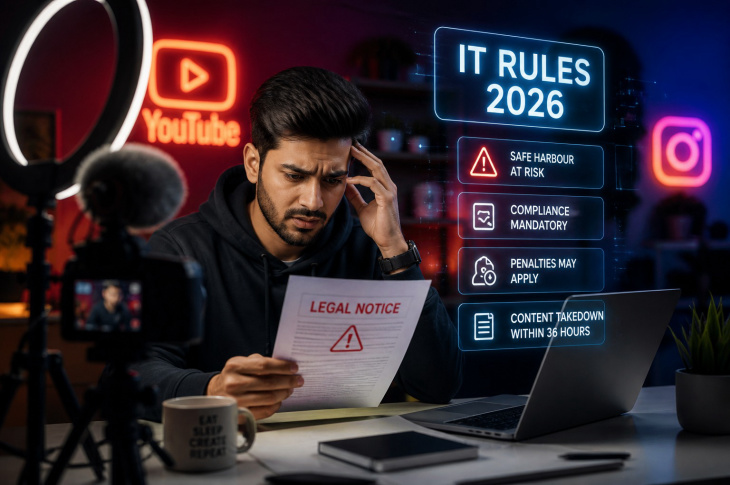


India’s New IT Rules 2026: Why YouTubers & Influencers Risk Losing Safe Harbour Protection


India’s digital creator economy has exploded over the past few years. From YouTubers and Instagram influencers to podcasters and livestreamers, millions of individuals are now earning through content creation. However, with growth comes regulation—and India’s New IT Rules 2026 mark a turning point that every creator, brand, and digital business must understand.
These updated rules are not just minor tweaks. They fundamentally change how liability works in the digital space. The biggest shift? The risk of losing “safe harbour” protection, which earlier acted as a legal shield for platforms and, indirectly, creators.
If you are a YouTuber, influencer, agency, or even a brand collaborating with creators, this guide will help you understand what’s changing, what risks you face, and how to stay compliant.
Also Read: New Rules to Regulate AI-Generated Content in India: Everything You Need to Know
What Are India’s New IT Rules 2026?
The IT Rules 2026 are an extension of earlier digital regulations introduced to govern online platforms and content in India. They are framed under the Information Technology Act, 2000, but go much further in defining accountability.
In Simple Terms
Earlier:
-
Platforms hosted content.
-
Creators published content.
-
Responsibility was often unclear or limited.
Now:
-
Creators, platforms, and even advertisers share responsibility.
-
You can no longer say, “I just posted it” or “I’m just promoting it.”
If your content reaches Indian audiences, you are expected to follow Indian law—even if you are outside India.
Why These Rules Matter More Than Ever
The digital ecosystem is no longer informal. It is now:
-
A major economic sector
-
A source of public influence
-
A potential risk for misinformation and misuse
Because of this, the government has tightened rules around:
-
Content authenticity
-
Advertising transparency
-
Data handling
-
Accountability
For creators, this means greater opportunity—but also greater legal exposure.
Also Read: Importance Of Technology For Lawyers in the Coming Times
Understanding Safe Harbour Protection
Before diving deeper, let’s understand the most critical concept: safe harbour.
What Is Safe Harbour?
Safe harbour is a legal protection under Indian law that:
-
Shields platforms from liability for user-generated content
-
Prevents immediate legal action if they act as intermediaries
Why It Was Important
Without safe harbour:
-
Platforms could be sued for every post
-
Creators could face direct liability for shared content
What Changed in 2026?
Safe harbour is no longer automatic.
It is now conditional.
If you fail to comply with IT Rules:
-
You lose protection
-
You can be held directly responsible
-
Legal action can be initiated against you
Key Changes in IT Rules 2026 for Creators
Let’s break down the most important changes affecting YouTubers and influencers.
1. Mandatory Disclosure of AI-Generated Content
With the rise of AI tools, synthetic content is everywhere.
Now, the law requires:
-
Clear disclosure of AI-generated or altered content
-
Visible labels in videos/posts
-
Metadata tagging (in some cases)
Example:
If you use:
-
AI voiceovers
-
Deepfake visuals
-
AI-generated avatars
You must inform your audience clearly.
Risk:
Failure can lead to:
-
Heavy penalties
-
Content removal
-
Criminal liability in serious cases
2. Strict Sponsored Content Rules
Paid promotions are no longer casual mentions.
You must:
-
Clearly disclose partnerships
-
Mention ads at the beginning of content
-
Avoid misleading claims
Applies To:
-
Paid collaborations
-
Gifted products
-
Affiliate links
Example:
Saying “I genuinely love this product” without disclosure can now be treated as misleading advertising.
3. Faster Takedown Requirements
Previously, content removal timelines were more relaxed.
Now:
-
36-hour deadline for takedown after official notice
-
Applies to creators and platforms
What Happens If You Miss It?
-
Loss of safe harbour protection
-
Platform action (demonetisation or suspension)
-
Possible legal proceedings
4. Data Retention and Compliance
Creators and platforms may need to:
-
Maintain records of content and user interactions
-
Store certain data for a minimum period
-
Respond to legal requests quickly
This is especially relevant for:
-
Large creators
-
Platforms
-
Agencies
5. Cross-Border Applicability
One of the most misunderstood aspects.
If you:
-
Live abroad
-
Run a foreign company
-
Target Indian audiences
You are still covered under Indian IT Rules.
Example:
A Dubai-based influencer earning from Indian followers must comply with Indian disclosure laws.
6. Increased Accountability for Large Creators
Creators with large followings may face additional responsibilities such as:
-
Higher compliance standards
-
Data-related obligations
-
Greater scrutiny
This reflects their influence and reach.
Also Read: Bar Council of Delhi Warns: Social Media Posts Could Get Lawyers Suspended
Why Influencers Risk Losing Safe Harbour Protection
Now let’s connect the dots.
The Core Issue
Safe harbour is lost when:
-
You do not follow compliance rules
-
You ignore notices
-
You publish misleading or illegal content
Real Risk Scenario
Imagine this:
You post a product review:
-
It is a paid collaboration
-
You don’t disclose it properly
-
A complaint is filed
Now:
-
Platform sends notice
-
You fail to act within time
-
Safe harbour is lost
Result:
-
You can be directly sued
-
The brand may also be liable
-
Platform may suspend your account
Common Mistakes Creators Are Making
Many creators are unknowingly violating the rules.
1. Not Disclosing Paid Content
Even today, many influencers:
-
Hide sponsorships
-
Use vague terms like “collab”
This is no longer safe.
2. Using AI Without Disclosure
AI tools are widely used for:
-
Voiceovers
-
Video edits
-
Thumbnails
But lack of disclosure can lead to legal trouble.
3. Ignoring Legal Notices
Some creators:
-
Don’t check emails
-
Ignore platform warnings
This can escalate quickly.
4. Mixing Personal and Business Activities
Running brand deals through personal accounts:
-
Creates tax issues
-
Leads to compliance gaps
5. Weak Contracts with Brands
Many agreements:
-
Don’t cover legal risks
-
Lack compliance clauses
This exposes both creators and brands.
Practical Steps to Stay Compliant
Here’s what you should do immediately.
1. Audit Your Existing Content
Check your last 6–12 months of posts:
-
Any undisclosed ads?
-
Any AI-generated content?
-
Any risky claims?
Fix issues proactively.
2. Standardise Disclosures
Always:
-
Mention “Ad”, “Sponsored”, or “Paid Partnership”
-
Place it clearly at the start
Make it visible and easy to understand.
3. Use Written Agreements
Every brand deal should include:
-
Disclosure responsibilities
-
Legal compliance clauses
-
Liability sharing
4. Separate Business Structure
Consider:
-
Registering a company or LLP
-
Keeping finances separate
This protects personal assets.
5. Respond Quickly to Notices
Never delay:
-
Platform warnings
-
Legal emails
-
Government notices
Take action within 24–36 hours.
6. Stay Updated on Regulations
Digital laws evolve quickly.
Follow:
-
Official notifications
-
Legal updates
-
Industry guidelines
Impact on Brands and Agencies
These rules don’t affect creators alone.
Brands Must:
-
Ensure influencers disclose ads
-
Avoid misleading campaigns
-
Maintain compliance records
Agencies Must:
-
Draft stronger contracts
-
Monitor influencer content
-
Educate clients
Failure can lead to:
-
Joint liability
-
Financial penalties
-
Reputation damage
Real-World Case-Based Scenario
Let’s simplify with a realistic example.
Scenario:
A fitness influencer promotes a supplement:
-
Claims it helps rapid weight loss
-
Doesn’t disclose it’s a paid promotion
A user complains:
-
Misleading claims
-
Health risk
Authorities step in:
-
Notice issued
-
Content not removed in time
Outcome:
-
Safe harbour protection lost
-
Influencer faces legal action
-
Brand also investigated
Legal Risks You Should Not Ignore
Under IT Rules 2026, risks include:
-
Financial penalties
-
Account suspension
-
Criminal liability (in serious cases)
-
Loss of brand deals
-
Reputation damage
How This Affects Small Creators
A common myth:
“Small creators are safe.”
Reality:
-
Rules apply to everyone
-
Even small accounts can face action
However:
- Larger creators face stricter scrutiny
Future of Content Creation in India
The rules signal a shift toward:
-
Professionalisation of content creation
-
Higher accountability
-
Transparent monetisation
Creators who adapt will:
-
Build trust
-
Attract better brand deals
-
Grow sustainably
Conclusion: Act Before It’s Too Late
India’s New IT Rules 2026 are not just regulatory updates—they are a complete transformation of the digital ecosystem.
The era of casual, unregulated content is over.
Now:
-
Transparency is mandatory
-
Compliance is critical
-
Responsibility is shared
The biggest takeaway?
Safe harbour is no longer guaranteed. It must be earned through compliance.
If you are a YouTuber, influencer, or digital entrepreneur, this is the time to:
-
Review your practices
-
Fix compliance gaps
-
Seek professional guidance if needed
Because in 2026, ignorance of the law is not just risky—it can be costly.
Frequently asked questions
What is safe harbour loss?
What is safe harbour loss?
It means losing legal protection and becoming directly liable for your content.
Are foreign creators covered under these rules?
Are foreign creators covered under these rules?
Yes. If your content is accessible in India, the rules apply to you.
Is AI content allowed?
Is AI content allowed?
Yes, but only with clear disclosure.
Do IT Rules 2026 apply to small creators?
Do IT Rules 2026 apply to small creators?
Yes. These rules apply to all creators targeting Indian audiences, regardless of follower count.
What is the takedown timeline?
What is the takedown timeline?
You must act within 36 hours of receiving a valid notice.

Online Consultation


Online Consultations


Trending
Frequently asked questions
What is safe harbour loss?
What is safe harbour loss?
It means losing legal protection and becoming directly liable for your content.
Are foreign creators covered under these rules?
Are foreign creators covered under these rules?
Yes. If your content is accessible in India, the rules apply to you.
Is AI content allowed?
Is AI content allowed?
Yes, but only with clear disclosure.
Do IT Rules 2026 apply to small creators?
Do IT Rules 2026 apply to small creators?
Yes. These rules apply to all creators targeting Indian audiences, regardless of follower count.
What is the takedown timeline?
What is the takedown timeline?
You must act within 36 hours of receiving a valid notice.
Online Consultations


Ask a Lawyer