


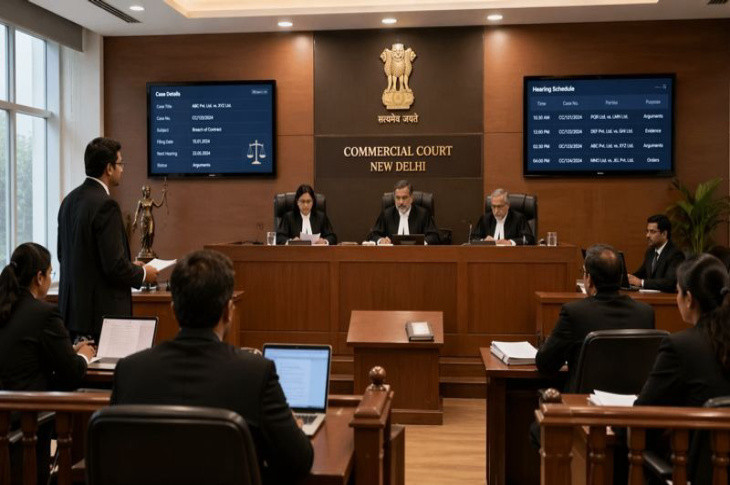


How Commercial Courts Are Reshaping Litigation in India: A Comprehensive Guide


Commercial disputes are an unavoidable part of doing business. Whether it involves delayed payments, breach of contracts, partnership conflicts, intellectual property issues, or infrastructure projects, disagreements can arise even between well-established companies. For many years, businesses in India struggled with one major problem—slow and unpredictable litigation. Cases often dragged on for years, sometimes decades, affecting cash flow, investor confidence, and business growth.
The introduction of Commercial Courts in India has significantly changed this reality. These specialised courts were created to resolve commercial disputes faster, more efficiently, and with greater procedural discipline. Today, they are playing a crucial role in strengthening the legal environment for businesses and improving the country's ease of doing business.
Understanding the Need for Commercial Courts in India
Before the establishment of commercial courts, most business disputes were handled by regular civil courts. While these courts performed an essential function, they were not designed specifically for complex commercial matters.
Common Problems Businesses Faced Earlier
-
Long delays in case resolution
-
Frequent adjournments
-
Procedural complexity
-
Limited judicial specialisation in commercial matters
-
Uncertainty in enforcement of contracts
For example, imagine a manufacturing company supplying goods worth ₹2 crore to a distributor. If payment is not made and litigation begins, a delay of several years can severely affect the company's operations, employee salaries, and credit rating.
These systemic challenges highlighted the urgent need for specialised courts focused on commercial disputes.
Legal Framework: The Commercial Courts Act, 2015
The turning point came with the enactment of the Commercial Courts Act, 2015, which introduced a structured system for resolving business disputes in India.
Objectives of the Act
The law was designed with clear goals:
-
Speed up commercial dispute resolution
-
Reduce case backlog
-
Improve efficiency in litigation
-
Promote investor confidence
-
Strengthen India's business environment
Key Institutions Created Under the Act
The legislation established three main judicial bodies:
-
Commercial Courts – At the district level
-
Commercial Divisions – In High Courts
-
Commercial Appellate Divisions – For appeals
These specialised forums handle disputes involving a specified monetary value, which currently begins at ₹3 lakh in most jurisdictions.
Practical Insight
If a company files a recovery suit worth ₹5 lakh or more arising from a commercial transaction, the case will typically be filed in a commercial court rather than a regular civil court.
What Qualifies as a Commercial Dispute?
One of the most important aspects of commercial litigation is determining whether a dispute falls within the jurisdiction of commercial courts.
Common Types of Commercial Disputes
Commercial courts generally handle disputes arising from:
-
Business contracts
-
Supply and distribution agreements
-
Partnership and shareholder disputes
-
Banking and finance transactions
-
Construction and infrastructure projects
-
Franchise agreements
-
Intellectual property matters
-
Insurance claims
-
Technology and software licensing
Real-Life Example
A startup signs a software development contract with an IT vendor. The vendor fails to deliver the software on time, causing financial losses. If the contract value exceeds the specified monetary threshold, the dispute can be filed before a commercial court.
Why This Broad Definition Matters
The wide scope ensures that most business-related disputes can be resolved in specialised courts rather than traditional civil courts, improving efficiency and predictability.
Jurisdiction of Commercial Courts: When and Where to File
Understanding jurisdiction is critical before filing a commercial suit.
Two Key Factors Determine Jurisdiction
-
Nature of the dispute
-
Specified monetary value
If both conditions are satisfied, the case falls within the jurisdiction of commercial courts.
Territorial Jurisdiction
The case must also be filed in the appropriate location based on:
-
Place of business
-
Place where the contract was executed
-
Location where the cause of action arose
Practical Tip for Businesses
Always include a jurisdiction clause in commercial contracts. This helps avoid disputes over where the case should be filed.
The Biggest Transformation: Strict Timelines in Commercial Litigation
One of the most significant ways commercial courts are reshaping litigation in India is through strict procedural timelines.
In traditional civil courts, delays were common due to repeated adjournments and late filings. Commercial courts introduced discipline and accountability into the litigation process.
Key Timelines Introduced
-
Written statement must be filed within 120 days
-
Disclosure of documents must occur early
-
Case management schedules are mandatory
-
Trial timelines are monitored by the court
Real-Life Scenario
Suppose a defendant fails to file a written statement within the prescribed time. In a commercial court, the right to file may be permanently forfeited. This strict approach encourages timely compliance and reduces unnecessary delays.
Why This Matters
For businesses, time equals money. Faster litigation means:
-
Reduced financial losses
-
Improved cash flow
-
Predictable legal outcomes
Case Management Hearings: A Game-Changer in Litigation
Commercial courts introduced the concept of case management hearings, which fundamentally changed how cases progress.
What Happens in a Case Management Hearing?
The judge:
-
Sets timelines for each stage of the case
-
Identifies issues in dispute
-
Schedules evidence and witness examination
-
Limits unnecessary adjournments
Practical Example
In a contract dispute worth ₹1 crore, the court may schedule:
-
Document submission within 30 days
-
Witness examination within 60 days
-
Final arguments within 90 days
This structured approach ensures that cases move forward efficiently.
Mandatory Pre-Institution Mediation: Encouraging Early Settlement
One of the most innovative reforms introduced by commercial courts is mandatory pre-institution mediation.
Before filing certain commercial suits, parties must attempt mediation to resolve the dispute amicably.
Purpose of Pre-Institution Mediation
-
Reduce court workload
-
Encourage settlement
-
Save time and legal expenses
-
Preserve business relationships
Real-Life Example
A supplier and retailer dispute payment of ₹4 lakh. Instead of immediately filing a lawsuit, they first participate in mediation. If they reach an agreement, litigation can be avoided entirely.
Benefits for Businesses
-
Faster resolution
-
Lower costs
-
Confidential negotiations
-
Reduced stress
Enhanced Disclosure and Document Transparency
Another major reform in commercial litigation is the mandatory disclosure of documents at the beginning of the case.
Earlier Practice
In traditional litigation, parties often produced documents late in the trial, causing delays.
Current Practice in Commercial Courts
Parties must:
-
Disclose all relevant documents upfront
-
Submit supporting evidence early
-
Provide complete documentation
Practical Impact
This system:
-
Prevents surprise evidence
-
Reduces delays
-
Improves transparency
-
Strengthens fairness
Role of Technology in Commercial Courts
Technology has played a central role in transforming commercial litigation in India.
Key Digital Innovations
-
E-filing of cases
-
Virtual hearings
-
Digital case tracking
-
Online document submission
-
Video conferencing
Real-Life Example
A company based in Mumbai can participate in a hearing without travelling to Delhi, saving time and costs.
Benefits of Technology
-
Faster case processing
-
Improved accessibility
-
Reduced paperwork
-
Greater transparency
Technology adoption became especially important during the pandemic, when virtual hearings ensured continuity of judicial proceedings.
How Commercial Courts Improve the Business Environment
Commercial courts have significantly strengthened India's business ecosystem.
Key Benefits for Businesses
-
Faster dispute resolution
-
Predictable legal outcomes
-
Improved contract enforcement
-
Increased investor confidence
-
Reduced litigation costs
Impact on Investment
Investors are more willing to invest in countries where disputes are resolved quickly and fairly. Efficient commercial courts create a stable legal environment that supports economic growth.
Example
A foreign investor evaluating investment opportunities in India will consider:
-
Speed of dispute resolution
-
Reliability of contract enforcement
-
Judicial efficiency
Commercial courts directly influence these factors.
Interaction Between Commercial Courts and Arbitration
Commercial courts do not replace arbitration. Instead, both systems work together to resolve disputes.
When Businesses Choose Arbitration
Businesses often select arbitration when they need:
-
Confidential proceedings
-
Flexibility in procedure
-
Neutral decision-makers
-
Faster resolution
Role of Commercial Courts in Arbitration
Commercial courts:
-
Enforce arbitration agreements
-
Grant interim relief
-
Confirm arbitration awards
-
Handle appeals
Practical Example
A company obtains an arbitration award against a contractor. If the contractor refuses to pay, the commercial court can enforce the award.
Judicial Discipline and Professional Litigation Culture
Commercial courts have introduced a new culture of professionalism in litigation.
Changes in Legal Practice
Lawyers and litigants must now:
-
Prepare cases thoroughly
-
Follow strict deadlines
-
Maintain accurate documentation
-
Avoid unnecessary delays
Result
The overall quality of litigation has improved significantly.
Challenges Still Facing Commercial Courts in India
Despite their success, commercial courts still face several challenges.
1. Infrastructure Limitations
Some courts lack adequate facilities, staff, and technology.
2. Case Backlog in Certain Regions
High-volume jurisdictions still experience delays.
3. Limited Awareness Among Businesses
Many small and medium enterprises are unaware of:
-
Commercial court procedures
-
Pre-institution mediation requirements
-
Filing deadlines
4. Shortage of Specialised Judges
Commercial disputes often involve complex financial and technical issues requiring specialised knowledge.
Practical Tips for Businesses Approaching Commercial Courts
Businesses can significantly improve their chances of success by following practical strategies.
1. Maintain Proper Documentation
Always keep:
-
Contracts
-
Invoices
-
Emails
-
Payment records
2. Draft Clear Contracts
Include:
-
Dispute resolution clauses
-
Jurisdiction clauses
-
Payment terms
-
Termination provisions
3. Respond Quickly to Legal Notices
Delays can weaken your legal position.
4. Consider Mediation First
Settlement can save time and resources.
5. Seek Legal Advice Early
Early guidance helps avoid costly mistakes.
How Commercial Courts Affect Small and Medium Businesses
Commercial courts are not only for large corporations. Small and medium enterprises (SMEs) also benefit significantly.
Key Advantages for SMEs
-
Faster recovery of payments
-
Reduced litigation delays
-
Better contract enforcement
-
Improved financial stability
Example
A small supplier waiting for payment of ₹6 lakh can now obtain a faster judgment through a commercial court compared to traditional civil litigation.
Impact on Contract Enforcement in India
One of the most critical improvements brought by commercial courts is stronger contract enforcement.
Why Contract Enforcement Matters
Contracts form the foundation of business relationships. When contracts are enforced efficiently:
-
Businesses operate with confidence
-
Transactions become predictable
-
Economic activity increases
Result
India's ranking in ease of doing business has improved partly due to better dispute resolution mechanisms.
Commercial Courts and Foreign Investment in India
Foreign investors closely monitor the efficiency of a country's legal system before investing.
What Investors Look For
-
Reliable courts
-
Speedy dispute resolution
-
Fair judicial process
-
Predictable outcomes
Commercial courts address these concerns by providing specialised forums for resolving commercial disputes.
The Future of Commercial Litigation in India
The future of commercial courts in India looks promising, with several developments expected.
Emerging Trends
-
Greater use of digital platforms
-
Expansion of commercial court infrastructure
-
Increased focus on mediation and settlement
-
Integration of artificial intelligence in case management
-
Specialised training for judges and lawyers
Expected Impact
These reforms will further improve:
-
Efficiency
-
Transparency
-
Investor confidence
-
Business growth
Conclusion: Why Commercial Courts Are Transforming Litigation in India
Commercial courts have fundamentally reshaped the litigation landscape in India. By introducing strict timelines, structured procedures, specialised judges, and modern technology, these courts have addressed long-standing problems in commercial dispute resolution.
They have improved efficiency, strengthened contract enforcement, and increased confidence among businesses and investors. While challenges remain, the overall transformation is undeniable.
For businesses, entrepreneurs, and professionals, understanding how commercial courts function is no longer optional—it is essential. A well-prepared legal strategy, supported by proper documentation and timely action, can make the difference between prolonged litigation and swift resolution.
As India's economy continues to grow, commercial courts will remain a cornerstone of a modern, efficient, and business-friendly legal system.
Frequently asked questions
What is the minimum value for filing a case in a commercial court?
What is the minimum value for filing a case in a commercial court?
Generally, disputes involving ₹3 lakh or more fall under commercial court jurisdiction, though this may vary depending on jurisdiction and amendments.
Is mediation mandatory before filing a commercial suit?
Is mediation mandatory before filing a commercial suit?
Yes, pre-institution mediation is mandatory in many commercial disputes unless urgent relief is required.
Can individuals file cases in commercial courts?
Can individuals file cases in commercial courts?
Yes, individuals can file cases if the dispute arises from a commercial transaction.
Are commercial courts faster than civil courts?
Are commercial courts faster than civil courts?
In most cases, yes. Commercial courts follow strict timelines and structured procedures designed to speed up litigation.

Online Consultation


Online Consultations


Trending
Frequently asked questions
What is the minimum value for filing a case in a commercial court?
What is the minimum value for filing a case in a commercial court?
Generally, disputes involving ₹3 lakh or more fall under commercial court jurisdiction, though this may vary depending on jurisdiction and amendments.
Is mediation mandatory before filing a commercial suit?
Is mediation mandatory before filing a commercial suit?
Yes, pre-institution mediation is mandatory in many commercial disputes unless urgent relief is required.
Can individuals file cases in commercial courts?
Can individuals file cases in commercial courts?
Yes, individuals can file cases if the dispute arises from a commercial transaction.
Are commercial courts faster than civil courts?
Are commercial courts faster than civil courts?
In most cases, yes. Commercial courts follow strict timelines and structured procedures designed to speed up litigation.
Online Consultations


Ask a Lawyer