




Heavy Machinery Used Inside Factories Not Liable for Road Tax: Supreme Court Clarifies the Motor Vehicles Act


Introduction: Why This Supreme Court Ruling Matters
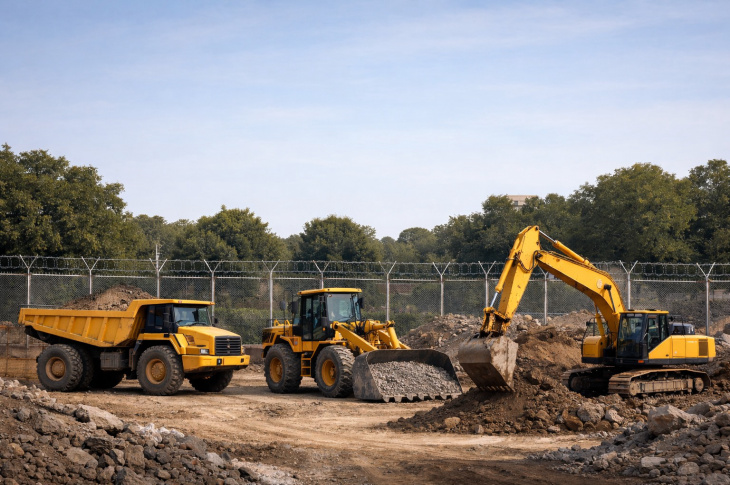
The question of whether heavy industrial and mining machinery should be treated as “motor vehicles” under Indian law has troubled industries, tax authorities, and courts for decades. With increasing mechanisation, factories and mines routinely use dumpers, excavators, loaders, dozers, surface miners, and drills—all of which are mechanically propelled and capable of movement, yet rarely, if ever, touch public roads.
In a landmark judgment, the Supreme Court of India has now decisively clarified that heavy machinery used exclusively within factories or enclosed industrial premises is not liable for motor vehicle registration or road tax. This ruling brings long-awaited certainty to industries across India and reinforces the constitutional limits on State taxation powers.
The decision came in Ultratech Cement Ltd. v. State of Gujarat, where the Court examined the scope of the Motor Vehicles Act, 1988 and the taxing power of States under the Constitution.
Background of the Dispute
How the Issue Arose
The dispute originated in the State of Gujarat, where transport authorities issued directions requiring registration under Section 39 of the Motor Vehicles Act, 1988 and payment of motor vehicle tax under Section 3 of the Gujarat Motor Vehicles Tax Act, 1958 for various categories of heavy machinery.
These machines included:
-
Dumpers
-
Loaders
-
Excavators
-
Dozers
-
Surface miners
-
Drilling equipment
Crucially, all these machines were used exclusively within factory and mining premises, which were fenced, controlled, and not accessible to the public. They were never driven on public roads.
Despite this, the authorities issued show-cause notices demanding:
-
Registration of the machinery
-
Payment of motor vehicle tax
-
Interest and penalty for alleged non-compliance
The Gujarat High Court upheld the State’s action, prompting the affected industries to approach the Supreme Court.
Legal Questions Before the Supreme Court
The appeals raised fundamental questions of constitutional and statutory interpretation:
-
Do heavy industrial machines used only inside factories qualify as “motor vehicles” under Section 2(28) of the Motor Vehicles Act, 1988?
-
Can a State levy motor vehicle tax on equipment that is not used or intended for use on public roads?
-
Does mere mechanical propulsion or theoretical mobility make machinery taxable as a motor vehicle?
Contentions of the Appellants (Industries)
Senior counsel appearing for the appellants advanced a structured and evidence-based argument.
1. Exclusion Under Section 2(28) of the Motor Vehicles Act
Section 2(28) defines a “motor vehicle” but expressly excludes:
“a vehicle of a special type adapted for use only in a factory or in any other enclosed premises.”
The appellants argued that:
-
The machinery was specially designed and manufactured for off-road industrial use
-
It was certified by manufacturers as unsuitable for ordinary road use
-
It lacked essential road-use features such as lighting systems, speed regulation, suspension suitable for highways, and compliance with road safety norms
2. Constitutional Limitation Under Entry 57, List II
The power of States to levy motor vehicle tax flows from Entry 57 of List II of the Seventh Schedule to the Constitution, which permits taxation only on:
“vehicles suitable for use on roads.”
The appellants emphasised that constitutional entries define the outer boundary of legislative power. A State statute cannot expand this scope by clever wording.
3. Actual and Intended Use Is Decisive
Evidence showed that the machinery:
-
Operated only within enclosed premises
-
Never used public roads
-
Did not derive any benefit from road infrastructure maintained by the State
Therefore, imposing road tax would be arbitrary and unconstitutional.
Contentions of the Respondent State of Gujarat
The State took a broader interpretation of both the statute and its taxing power.
1. Wide Language of the Gujarat Motor Vehicles Tax Act
The State relied on Section 3(1) of the Gujarat Motor Vehicles Tax Act, 1958, which authorises tax on:
“all motor vehicles used or kept for use in the State.”
According to the State, the provision does not distinguish between on-road and off-road usage.
2. Mechanical Propulsion as the Test
The State argued that:
-
The machinery was mechanically propelled
-
It could move from one place to another
-
Some machines could theoretically be driven short distances on roads
Therefore, they fell within the broad definition of “motor vehicle” and attracted tax.
Constitutional Framework: The Foundation of the Judgment
Before interpreting statutes, the Supreme Court turned to the constitutional source of taxing power.
Entry 57, List II – A Built-In Limitation
Entry 57 authorises States to tax:
“vehicles, whether mechanically propelled or not, suitable for use on roads.”
The Court stressed that:
-
This phrase is not ornamental
-
It places a substantive constitutional limitation on State taxation
-
Any State law exceeding this limit is invalid to that extent
A taxing statute cannot enlarge the constitutional field by redefining what qualifies as a taxable vehicle.
Interpreting Section 2(28) of the Motor Vehicles Act, 1988
The Court undertook a careful textual and purposive interpretation of Section 2(28).
Two Distinct Parts of the Definition
-
Inclusive Part – Covers mechanically propelled vehicles adapted for use on roads
-
Exclusionary Part – Expressly excludes special-type vehicles adapted only for factory or enclosed premises use
The Court held that:
-
The exclusion is deliberate and substantive
-
It must be given full legal effect
-
Treating it as incidental would render the exclusion meaningless
Key Judicial Observations
1. Capability Is Not the Same as Suitability
The Court made a crucial distinction:
A vehicle may be capable of movement, but that does not make it suitable for ordinary road use.
Design intent, certification, and actual use are decisive factors.
2. Actual Use Cannot Be Ignored
Where consistent evidence shows that machinery:
-
Is designed for off-road use
-
Is certified as such
-
Is actually confined to enclosed premises
…it cannot be artificially pulled into the tax net.
3. Warning Against Overbroad Interpretation
The Court cautioned that accepting the State’s argument would lead to absurd consequences, such as:
-
Military tanks being taxed as motor vehicles
-
Aircraft towing vehicles being treated as road vehicles
Such outcomes could never have been intended by the Constitution or Parliament.
Reliance on Landmark Precedents
Bolani Ores Ltd. v. State of Orissa
The Court reaffirmed the principle from Bolani Ores Ltd. v. State of Orissa:
-
“Adapted for use upon roads” means suitable for ordinary road use
-
Vehicles confined to enclosed premises are not taxable
Tarachand Logistic Solutions Ltd. v. State of Andhra Pradesh
In Tarachand Logistic Solutions Ltd. v. State of Andhra Pradesh, the Court had held that:
-
Where a vehicle does not operate in a public place
-
And does not benefit from public roads
…imposing motor vehicle tax is unjustified.
The present judgment builds directly on these settled principles.
The Final Decision of the Supreme Court
The Supreme Court allowed the appeals and held that:
-
Heavy construction and industrial machinery used only within factories or enclosed premises
-
Is excluded from the definition of “motor vehicle” under Section 2(28)
-
Is not liable for registration under Section 39 of the Motor Vehicles Act, 1988
-
Is not subject to motor vehicle tax under the Gujarat Motor Vehicles Tax Act, 1958, unless actually used on public roads
The judgment was delivered by:
-
Justice Pankaj Mithal
-
Justice Prasanna B. Varale
Practical Impact of the Judgment
1. Relief for Industries and Manufacturers
Industries involved in:
-
Cement
-
Mining
-
Infrastructure
-
Power generation
-
Heavy manufacturing
will benefit from significant cost savings and reduced compliance burdens.
2. Clear Compliance Framework
Companies should now focus on:
-
Maintaining manufacturer certificates
-
Documenting exclusive off-road use
-
Ensuring machinery does not operate on public roads
3. Limits on State Tax Powers
States cannot expand motor vehicle taxation beyond the constitutional boundary of road suitability.
What If Such Machinery Is Occasionally Used on Roads?
The Court clarified that actual use matters. If:
-
Machinery is regularly or substantially used on public roads
-
Or modified for road suitability
…it may attract registration and tax for that period.
Conclusion: A Constitutionally Sound and Industry-Friendly Ruling
The Supreme Court’s ruling in Ultratech Cement Ltd. v. State of Gujarat is a decisive reaffirmation of constitutional discipline in taxation. By holding that heavy machinery used exclusively within factories is not liable for road tax, the Court has:
-
Protected industries from arbitrary taxation
-
Clarified the scope of the Motor Vehicles Act
-
Reinforced the principle that taxation must align with constitutional authority and practical reality
For industries, compliance professionals, and policymakers alike, this judgment sets a clear, fair, and legally sound benchmark for the future.
Quick Case Reference
-
Case Title: Ultratech Cement Ltd. v. State of Gujarat & Ors.
-
Case No.: Civil Appeal Nos. 3352–3353 of 2017
-
Court: Supreme Court of India
-
Coram: Justice Pankaj Mithal & Justice Prasanna B. Varale
Download the Judgment Here:
Supreme Court JudgmentFrequently asked questions
What if the machinery is occasionally moved on public roads?
What if the machinery is occasionally moved on public roads?
If machinery is actually used on public roads—even occasionally—it may attract registration and tax for that period. The exemption applies only when use is exclusively off-road within enclosed premises.
Does mechanical propulsion alone make industrial machinery a “motor vehicle”?
Does mechanical propulsion alone make industrial machinery a “motor vehicle”?
No. Mechanical propulsion or theoretical mobility is not decisive. What matters is whether the machine is designed, certified, and actually used for ordinary road use. Special-type machines adapted only for off-road industrial use are excluded.
What evidence helps prove that machinery is exempt from road tax?
What evidence helps prove that machinery is exempt from road tax?
Key evidence includes manufacturer certificates, technical specifications showing off-road design, lack of road-safety features, and records proving exclusive use within enclosed premises. Consistent documentation is critical.
Can States levy motor vehicle tax even if the machine never uses public roads?
Can States levy motor vehicle tax even if the machine never uses public roads?
No. A State’s taxing power under Entry 57 of List II of the Seventh Schedule extends only to vehicles suitable for use on roads. Machinery confined to enclosed premises and not benefiting from public road infrastructure cannot be taxed.
Are excavators, dumpers, and loaders used inside factories liable for road tax?
Are excavators, dumpers, and loaders used inside factories liable for road tax?
No. The Supreme Court has clarified that heavy machinery used exclusively within factories or enclosed industrial premises is not liable for motor vehicle registration or road tax, as it is excluded from the definition of “motor vehicle” under Section 2(28) of the Motor Vehicles Act, 1988.

Online Consultation


Online Consultations


Trending
Frequently asked questions
What if the machinery is occasionally moved on public roads?
What if the machinery is occasionally moved on public roads?
If machinery is actually used on public roads—even occasionally—it may attract registration and tax for that period. The exemption applies only when use is exclusively off-road within enclosed premises.
Does mechanical propulsion alone make industrial machinery a “motor vehicle”?
Does mechanical propulsion alone make industrial machinery a “motor vehicle”?
No. Mechanical propulsion or theoretical mobility is not decisive. What matters is whether the machine is designed, certified, and actually used for ordinary road use. Special-type machines adapted only for off-road industrial use are excluded.
What evidence helps prove that machinery is exempt from road tax?
What evidence helps prove that machinery is exempt from road tax?
Key evidence includes manufacturer certificates, technical specifications showing off-road design, lack of road-safety features, and records proving exclusive use within enclosed premises. Consistent documentation is critical.
Can States levy motor vehicle tax even if the machine never uses public roads?
Can States levy motor vehicle tax even if the machine never uses public roads?
No. A State’s taxing power under Entry 57 of List II of the Seventh Schedule extends only to vehicles suitable for use on roads. Machinery confined to enclosed premises and not benefiting from public road infrastructure cannot be taxed.
Are excavators, dumpers, and loaders used inside factories liable for road tax?
Are excavators, dumpers, and loaders used inside factories liable for road tax?
No. The Supreme Court has clarified that heavy machinery used exclusively within factories or enclosed industrial premises is not liable for motor vehicle registration or road tax, as it is excluded from the definition of “motor vehicle” under Section 2(28) of the Motor Vehicles Act, 1988.
Online Consultations


Ask a Lawyer