


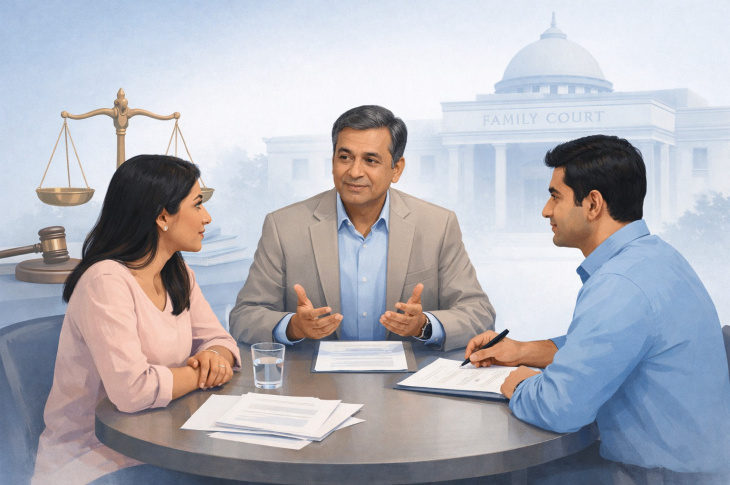


How Divorce Mediation Helps Couples Settle Disputes Without Going to Court


Breaking up a marriage is never easy. Along with emotional stress, couples often worry about legal battles, financial pressure, and the fear of long courtroom proceedings. Traditional divorce litigation can take months or even years, draining time, energy, and resources.
This is where divorce mediation offers a more peaceful and practical alternative. Instead of fighting legal battles in court, couples sit down with a trained neutral mediator who helps them discuss disputes calmly and reach mutually acceptable solutions.
Mediation focuses on cooperation rather than conflict. It encourages respectful communication, helps couples maintain control over decisions, and allows them to separate in a more dignified and constructive way.
Also Read: Divorce Law in India
What Is Divorce Mediation?
Divorce mediation is a structured and voluntary process where a neutral third party — called a mediator — helps separating couples discuss and resolve disputes without going through a courtroom battle.
Instead of a judge imposing decisions, both partners work together to find solutions that suit their lives and future goals.
The mediator does not take sides or give judgments. Their role is to:
-
Facilitate communication
-
Encourage mutual understanding
-
Help clarify legal and practical issues
-
Guide both parties toward workable agreements
Common matters discussed in mediation include:
-
Child custody and parenting plans
-
Division of assets and liabilities
-
Maintenance or alimony
-
Living arrangements after separation
The focus remains on cooperation and problem-solving rather than blame or accusations.
Also Read: Preparing for Divorce in 2026: 5 Crucial Things You Must Know Before Filing
The Legal Position of Divorce Mediation in India
Mediation has become increasingly important within India’s legal system. Courts often encourage mediation to reduce conflict and promote amicable settlements.
Relevant legal support includes:
-
Section 89 of the Civil Procedure Code (CPC) – Encourages alternative dispute resolution methods like mediation.
-
Family Courts Act, 1984 – Promotes conciliation and settlement in matrimonial disputes.
-
Supreme Court Guidelines – Emphasize mediation to reduce litigation and preserve family relationships.
-
Mediation Act, 2023 (India) – Strengthens the framework for mediation and encourages structured dispute resolution.
Family courts frequently refer couples to mediation centers before proceeding with trial hearings.
Also Read: Divorce Simplified Types Of Divorce And Divorce Procedures In India
How Divorce Mediation Works: Step-by-Step Process
Step 1: Initial Consultation
Both spouses agree to participate voluntarily. A mediator explains:
-
The process
-
Ground rules
-
Confidentiality standards
-
Expected outcomes
Step 2: Identifying Key Issues
The couple lists areas needing resolution, such as:
-
Children’s arrangements
-
Financial settlements
-
Property division
Step 3: Joint Discussions
During sessions:
-
Each person gets equal opportunity to speak
-
The mediator ensures respectful dialogue
-
Emotional concerns are acknowledged but managed constructively
Step 4: Negotiation and Problem-Solving
The mediator helps explore options that benefit both sides, rather than encouraging a “winner vs loser” mindset.
Step 5: Drafting the Agreement
Once consensus is reached:
-
Terms are written clearly
-
Both parties review the agreement
-
Lawyers may review the draft if required
Step 6: Legal Formalization
The mediated settlement can be submitted to court for approval, making it legally binding.
Also Read: A Comprehensive Guide On How To File For Divorce In India
Role and Responsibilities of a Divorce Mediator
A mediator is not a judge or an advocate. Their main responsibilities include:
-
Maintaining neutrality
-
Encouraging respectful communication
-
Helping clarify misunderstandings
-
Ensuring balanced participation
-
Guiding discussions toward solutions
A skilled mediator also helps manage emotional tension and keeps conversations focused on constructive outcomes.
Also Read: Legal Grounds for Divorce in India
Issues That Can Be Resolved Through Mediation
Divorce mediation can address most disputes involved in separation:
-
Child custody and visitation rights
-
Parenting responsibilities and education decisions
-
Financial settlements and alimony
-
Division of shared property
-
Distribution of debts and liabilities
-
Post-divorce communication plans
Because mediation is flexible, couples can design customized solutions that traditional courts might not offer.
Also Read: Comprehensive Guide to Divorce Documents in India: A Step-by-Step Approach
Key Benefits of Divorce Mediation Over Court Litigation
Faster Resolution
Court cases often face delays. Mediation allows couples to set their own pace and resolve issues quickly.
Greater Control
Instead of judges making decisions, both spouses shape outcomes themselves.
Less Conflict
The collaborative approach reduces hostility and encourages respectful conversations.
Flexible Solutions
Couples can create unique arrangements tailored to their lifestyle and family needs.
Also Read: What is Divorce Mediation
Emotional and Psychological Advantages of Mediation
Divorce is emotionally challenging. Litigation can worsen stress by turning personal issues into legal battles.
Mediation offers:
-
A calmer environment
-
Opportunities for open communication
-
Reduced hostility
-
Better co-parenting relationships
When couples work together on decisions, they often experience greater closure and emotional stability after separation.
Also Read: Avoid Costly Divorce Battles: The Benefits of Mediation Over Litigation
Financial Savings Through Mediation
Traditional divorce litigation can involve:
-
High legal fees
-
Court costs
-
Repeated hearings
Mediation usually requires fewer sessions and less formal legal work, making it significantly more affordable.
Reduced financial stress also helps both partners begin their post-divorce life on more stable ground.
Also Read: Rights of a Man in Divorce: Understanding Legal Protections and Fair Settlements in India
Privacy and Confidentiality in Mediation
Court proceedings are generally part of public records. Mediation sessions, however, remain confidential.
This privacy allows couples to:
-
Discuss sensitive financial details openly
-
Address personal matters without public exposure
-
Explore solutions without fear of judgment
Confidentiality encourages honest conversations and meaningful compromise.
Is Divorce Mediation Right for Every Couple?
Mediation works best when:
-
Both spouses are willing to communicate
-
There is mutual respect, even if disagreements exist
-
Each partner wants a peaceful resolution
Even couples experiencing tension can benefit from mediation if they remain open to dialogue.
Situations Where Mediation May Not Be Suitable
Mediation may not be appropriate when:
-
There is domestic violence or abuse
-
One partner attempts to control or intimidate the other
-
There is a serious imbalance of power or knowledge
-
One spouse refuses to participate honestly
In such cases, traditional court processes may provide better protection and structure.
How to Prepare for a Divorce Mediation Session
Preparation improves the chances of success. Consider:
-
Gathering financial documents
-
Listing concerns and priorities
-
Being open to compromise
-
Managing emotional expectations
Approach mediation with a solution-focused mindset rather than a desire to “win.”
Common Misconceptions About Divorce Mediation
Myth 1: Mediation means giving up legal rights.
Reality: Agreements can be reviewed by lawyers and approved by courts.
Myth 2: Mediation only works for friendly couples.
Reality: Many high-conflict couples resolve disputes through structured mediation.
Myth 3: Mediators decide the outcome.
Reality: The couple makes decisions — the mediator only guides discussion.
Practical Tips for Successful Mediation
-
Listen actively without interrupting
-
Focus on long-term solutions rather than past conflicts
-
Keep discussions child-focused when parenting issues arise
-
Remain flexible and open-minded
-
Take breaks if emotions become overwhelming
Remember, mediation is about cooperation, not confrontation.
Legal Validity of Mediated Agreements in India
A mediated settlement becomes legally enforceable once:
-
Both parties sign the agreement voluntarily
-
It is reviewed and approved by a court
-
It forms part of the divorce decree
Courts generally respect mutually agreed settlements unless they violate legal rights or public policy.
Conclusion: A Peaceful Path Toward Separation
Divorce doesn’t have to become a bitter courtroom battle. Mediation offers a practical and respectful way for couples to resolve disputes while maintaining dignity and emotional balance.
By encouraging communication, collaboration, and mutual understanding, mediation helps people avoid unnecessary legal stress and create solutions that truly fit their lives.
When both parties feel heard and involved in decision-making, they are more likely to accept and follow through on agreements. This leads to smoother transitions, healthier co-parenting relationships, and a more positive start to the next phase of life.
For many couples, divorce mediation isn’t just an alternative to court — it’s a smarter, more compassionate way to move forward.
Frequently asked questions
How long does divorce mediation take?
How long does divorce mediation take?
It varies, but many couples resolve issues within a few sessions.
Is mediation compulsory?
Is mediation compulsory?
Usually voluntary, but courts may encourage or refer couples to mediation.
Can lawyers participate in mediation?
Can lawyers participate in mediation?
Yes. Parties may consult lawyers before or during mediation.
Can mediation handle complex financial disputes?
Can mediation handle complex financial disputes?
Yes, especially when supported by financial experts or legal advisors.

Online Consultation


Online Consultations


Trending
Frequently asked questions
How long does divorce mediation take?
How long does divorce mediation take?
It varies, but many couples resolve issues within a few sessions.
Is mediation compulsory?
Is mediation compulsory?
Usually voluntary, but courts may encourage or refer couples to mediation.
Can lawyers participate in mediation?
Can lawyers participate in mediation?
Yes. Parties may consult lawyers before or during mediation.
Can mediation handle complex financial disputes?
Can mediation handle complex financial disputes?
Yes, especially when supported by financial experts or legal advisors.
Online Consultations


Ask a Lawyer