


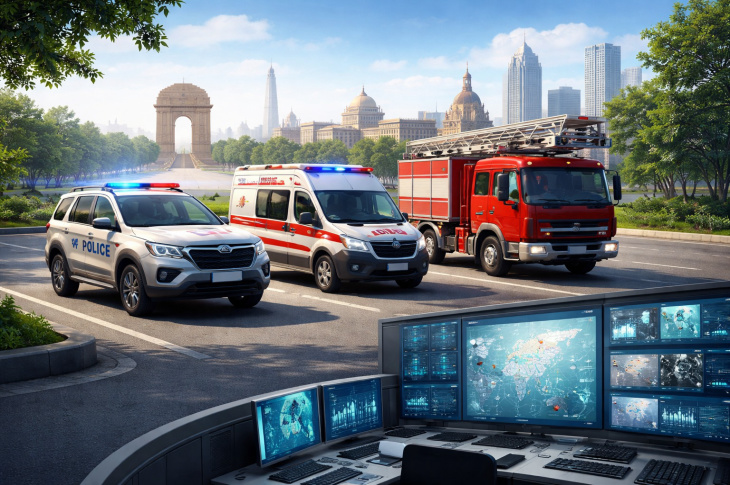


Delhi Moves to One Emergency Number: CM Rekha Gupta Announces 112 – 5 Key Things to Know


Emergencies do not come with a warning. In moments of panic—whether it is a road accident, a fire outbreak, a medical crisis, or a law-and-order situation—every second counts. For years, citizens in Delhi had to remember different helpline numbers for police, ambulance, fire services, and disaster response. This often caused confusion, delay, and sometimes tragic consequences.
To address this long-standing issue, Delhi Chief Minister Rekha Gupta has announced the full implementation of a single emergency number—112—for all emergency services in the national capital. This move aligns Delhi with the national vision of a unified, technology-driven emergency response system.
Under this new system, one call, one message, or one tap on a mobile app will be enough to seek help, regardless of the type of emergency.
What Is the 112 Emergency Number?
112 is India’s national, single emergency helpline number, notified by the Ministry of Home Affairs (MHA). It is designed to replace multiple emergency numbers by acting as a central access point for all emergency services, including:
-
Police
-
Fire services
-
Ambulance and medical emergencies
-
Disaster management and rescue services
Instead of dialing different numbers like 100, 101, or 108, citizens will now only need to remember 112.
The Delhi government has confirmed that the capital will soon see full-scale implementation of this system, ensuring seamless coordination between agencies and faster emergency response.
Why Was a Single Emergency Number Needed in Delhi?
Delhi is a densely populated, fast-moving metropolitan city. During emergencies, confusion over which number to call often leads to:
-
Loss of precious time
-
Multiple calls to different departments
-
Delayed dispatch of emergency vehicles
-
Poor coordination between services
In many cases, victims or witnesses are unable to decide whether to call the police, ambulance, or fire brigade first.
The 112 system solves this problem by acting as a single gateway. Once the emergency is reported, the system itself decides which agency—or combination of agencies—needs to respond.
This shift is not just administrative; it is a life-saving reform.
CM Rekha Gupta’s Announcement: What Was Said?
Announcing the rollout, Chief Minister Rekha Gupta stated that Delhi will soon fully implement the national emergency number 112, as notified by the Ministry of Home Affairs.
She emphasised that:
-
Citizens will no longer need to remember multiple emergency numbers
-
Help can be sought through calls, mobile apps, SMS, panic buttons, and online platforms
-
Emergency response will be faster, more coordinated, and more accountable
According to the Chief Minister, the initiative reflects the government’s commitment to public safety, transparency, and technology-led governance.
5 Key Things to Know About Delhi’s 112 Emergency System
1. One Number for All Emergencies
The most important change is simplicity.
With 112, a single number will connect citizens to:
-
Police assistance
-
Fire and rescue services
-
Ambulance and medical help
-
Disaster response teams
Once a call or alert is received, the system determines the nature of the emergency and automatically routes the information to the concerned department.
This eliminates confusion, especially in high-stress situations.
2. Multiple Ways to Seek Help (Not Just Calls)
One of the strongest features of the 112 system is that citizens are not limited to voice calls.
Help can be requested through:
-
Phone calls
-
Dedicated mobile application
-
Panic/emergency button
-
SMS
-
Online platforms
This is especially important in situations such as:
-
Domestic violence
-
Kidnapping or stalking
-
Medical emergencies where the person cannot speak
-
Situations involving hearing or speech impairment
The availability of silent and digital modes of communication makes the system more inclusive and safer, particularly for women, children, senior citizens, and persons with disabilities.
3. Powered by ERSS 2.0: A Modern Emergency Platform
The unified emergency number in Delhi will operate through Emergency Response Support System (ERSS) 2.0.
ERSS 2.0 is an advanced, technology-driven platform designed to:
-
Receive emergency alerts from multiple channels
-
Centralise call handling
-
Ensure real-time coordination between agencies
All incoming calls, messages, app alerts, and online requests will be received at a single Public Safety Answering Point (PSAP).
This ensures:
-
No duplication of effort
-
Clear responsibility
-
Faster decision-making
The PSAP acts as the brain of the emergency response system.
4. Real-Time Location Tracking and Faster Response
One of the most critical improvements under ERSS 2.0 is automatic location detection.
As soon as an emergency alert is received:
-
The caller’s location is identified in real time
-
There is no need for the caller to explain their address
-
The nearest emergency vehicle is dispatched immediately
This is particularly useful in:
-
Road accidents on highways
-
Unfamiliar areas or public places
-
Situations where the victim is disoriented or unconscious
The system also allows real-time monitoring of:
-
Incident location
-
Vehicle dispatch status
-
Estimated arrival time
If a delay is detected, an alternative vehicle can be deployed instantly, ensuring continuity in emergency response.
This significantly improves outcomes during the golden hour, especially in medical emergencies.
5. Improved Accountability and Transparency
Earlier, emergency response often suffered from:
-
Lack of coordination
-
Delayed handovers between departments
-
No central monitoring mechanism
Under the new system:
-
Every call is logged digitally
-
Dispatch and response times are tracked
-
Control rooms have live oversight
A single emergency request can trigger simultaneous action by multiple services, such as police and ambulance responding together to a road accident.
This integrated approach:
-
Reduces blame-shifting
-
Improves accountability
-
Builds public trust
According to the Delhi government, the new system will make emergency response faster, more transparent, and more reliable.
Phased Implementation Plan in Delhi
To ensure a smooth transition, the Delhi government has planned a phased rollout of the 112 emergency system.
Phase 1: Integration of Existing Emergency Numbers
All existing emergency helplines will be linked to 112 so that calls made to older numbers are automatically redirected.
Phase 2: Technical Upgrades and Testing
Infrastructure upgrades, system stress testing, and integration with emergency departments.
Phase 3: Training and Public Awareness
Training call handlers, emergency personnel, and running awareness campaigns to educate citizens.
Phase 4: Evaluation and Refinement
Monitoring performance, addressing gaps, and refining response protocols.
This phased approach ensures minimal disruption and maximum effectiveness.
How Will 112 Impact Citizens on the Ground?
For the common citizen, the impact is straightforward:
-
No confusion about which number to call
-
Faster arrival of emergency services
-
Better coordination between agencies
-
Increased confidence during emergencies
For vulnerable groups, the impact is even more significant due to non-verbal modes of seeking help.
112 and the National Vision for Safer Cities
Delhi’s move to fully implement 112 places it firmly within the nationwide effort to modernise emergency response systems.
The goal is to:
-
Standardise emergency response across India
-
Use technology to reduce response time
-
Improve citizen safety in urban and rural areas
Once fully operational, 112 will become the backbone of India’s public safety framework.
Legal and Governance Perspective
From a governance standpoint, the 112 system reflects:
-
Better inter-departmental coordination
-
Use of technology for public welfare
-
Accountability through data and monitoring
Legally, it strengthens the State’s duty to protect life under Article 21 of the Constitution of India, which guarantees the right to life and personal liberty.
Efficient emergency response is no longer just an administrative function—it is a constitutional responsibility.
Challenges and the Road Ahead
While the system is promising, its success will depend on:
-
Public awareness
-
Proper training of call handlers
-
Maintenance of technological infrastructure
-
Regular audits and upgrades
Citizens must also be educated to use 112 responsibly and avoid misuse or hoax calls.
A Major Step Towards a Safer Delhi
With the introduction of the single emergency number 112, Delhi is taking a decisive step towards becoming a safer, smarter, and more responsive city.
Once fully implemented:
-
One call will be enough
-
Help will reach faster
-
Emergency response will be coordinated and accountable
In moments of crisis, simplicity saves lives. And 112 delivers exactly that—simple, fast, and reliable access to help, anytime, anywhere in Delhi.
Final Takeaway
Remember just one number: 112.
In an emergency, it could make all the difference.
Frequently asked questions
What is the 112 emergency number in Delhi?
What is the 112 emergency number in Delhi?
The 112 emergency number is a single, unified helpline for all emergency services in Delhi. By dialing 112, citizens can reach the police, ambulance, fire services, and disaster management authorities through one common number, instead of remembering multiple helplines.
Is the 112 emergency service available 24×7 in Delhi?
Is the 112 emergency service available 24×7 in Delhi?
Yes. The 112 emergency helpline operates 24 hours a day, 7 days a week. Emergency requests are received at a central control room, ensuring continuous monitoring, quick response, and accountability at all times.
Can I contact 112 without making a phone call?
Can I contact 112 without making a phone call?
Yes. Apart from calling, help can be requested through SMS, a mobile application, panic button, and online platforms. This feature is especially useful in situations where a person is unable to speak, such as during medical emergencies, domestic violence, or when discreet help is needed.
Will old emergency numbers like 100, 101, or 108 still work in Delhi?
Will old emergency numbers like 100, 101, or 108 still work in Delhi?
During the transition period, existing emergency numbers will be integrated with 112. Calls made to older helplines will be automatically redirected. However, citizens are encouraged to remember and use 112 as the primary emergency number going forward.
How does the 112 system find my location during an emergency?
How does the 112 system find my location during an emergency?
The 112 emergency system uses real-time location tracking technology under ERSS 2.0. As soon as a call or alert is received, the system automatically detects the caller’s location and dispatches the nearest police vehicle, ambulance, or fire tender, reducing response time.

Online Consultation


Online Consultations


Trending
Frequently asked questions
What is the 112 emergency number in Delhi?
What is the 112 emergency number in Delhi?
The 112 emergency number is a single, unified helpline for all emergency services in Delhi. By dialing 112, citizens can reach the police, ambulance, fire services, and disaster management authorities through one common number, instead of remembering multiple helplines.
Is the 112 emergency service available 24×7 in Delhi?
Is the 112 emergency service available 24×7 in Delhi?
Yes. The 112 emergency helpline operates 24 hours a day, 7 days a week. Emergency requests are received at a central control room, ensuring continuous monitoring, quick response, and accountability at all times.
Can I contact 112 without making a phone call?
Can I contact 112 without making a phone call?
Yes. Apart from calling, help can be requested through SMS, a mobile application, panic button, and online platforms. This feature is especially useful in situations where a person is unable to speak, such as during medical emergencies, domestic violence, or when discreet help is needed.
Will old emergency numbers like 100, 101, or 108 still work in Delhi?
Will old emergency numbers like 100, 101, or 108 still work in Delhi?
During the transition period, existing emergency numbers will be integrated with 112. Calls made to older helplines will be automatically redirected. However, citizens are encouraged to remember and use 112 as the primary emergency number going forward.
How does the 112 system find my location during an emergency?
How does the 112 system find my location during an emergency?
The 112 emergency system uses real-time location tracking technology under ERSS 2.0. As soon as a call or alert is received, the system automatically detects the caller’s location and dispatches the nearest police vehicle, ambulance, or fire tender, reducing response time.
Online Consultations


Ask a Lawyer