


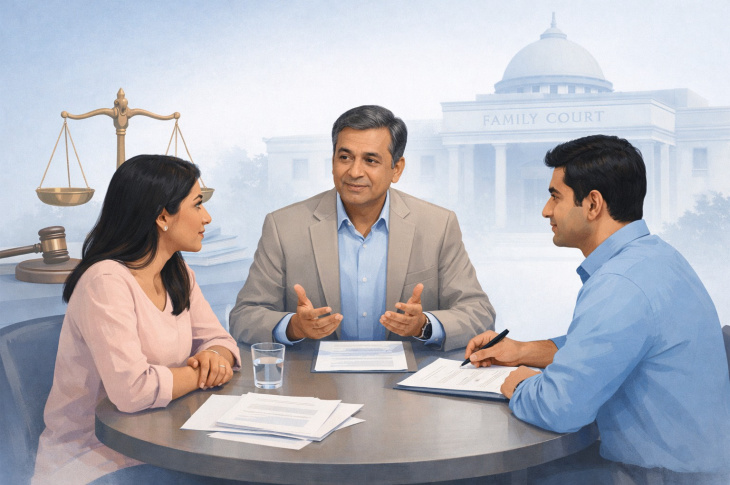


Once Settlement Is Final, Consent for Mutual Divorce Cannot Be Revoked: Supreme Court Rules


Divorce by mutual consent is often seen as the most peaceful and practical way to end a marriage in India. It allows couples to separate with dignity, avoid prolonged litigation, and settle financial and personal disputes in a structured manner. However, an important legal question frequently arises: Can one spouse change their mind after agreeing to a settlement and filing for mutual divorce?
In a significant judgment delivered in Dhananjay Rathi vs. Ruchika Rathi, the Supreme Court of India clarified a crucial legal principle. The Court held that although a spouse generally has the right to withdraw consent before the final divorce decree, that right cannot be misused when the parties have already entered into a full and final settlement resolving all disputes.
This ruling strengthens the reliability of mediation settlements and sends a clear message:
Once a settlement is finalized and acted upon, backing out without valid legal reasons can lead to strict consequences.
Also Read: What is Divorce Mediation
Understanding Mutual Divorce in India: A Quick Overview
Before discussing the Supreme Court’s ruling, it is important to understand how mutual divorce works under Indian law.
What Is Mutual Consent Divorce?
Mutual consent divorce is governed primarily by Hindu Marriage Act, 1955 and similar provisions under other personal laws. It allows both spouses to jointly request the court to dissolve their marriage when they agree that the relationship cannot continue.
Key Features of Mutual Divorce
-
Both spouses agree to end the marriage
-
Issues like maintenance, child custody, and property division are settled
-
The process usually involves two motions
-
A cooling-off period (typically six months) is provided
-
The court grants the final divorce decree after confirming consent
Why Couples Prefer Mutual Divorce
Many couples choose mutual divorce because:
-
It is faster than contested divorce
-
It reduces emotional stress
-
It lowers legal costs
-
It provides certainty and closure
-
It allows private settlement of disputes
However, the success of mutual divorce depends heavily on trust and adherence to the settlement terms.
Also Read: Avoid Costly Divorce Battles: The Benefits of Mediation Over Litigation
The Legal Question: Can Consent Be Withdrawn?
This is one of the most frequently asked questions in family law.
The General Rule
Under Indian law:
Either spouse can withdraw consent at any time before the final divorce decree is granted.
This principle exists to protect individuals from being forced into divorce.
The Practical Challenge
Problems arise when:
-
A detailed settlement agreement is signed
-
Money or property is exchanged
-
Legal obligations are fulfilled
-
One spouse later refuses to proceed with divorce
Such situations create uncertainty and can lead to misuse of the legal process.
The Supreme Court addressed this exact issue in the Rathi case.
Also Read: Divorce Law in India
Case Background: What Happened in the Rathi Case?
To understand the importance of the judgment, let us look at the facts in a simplified manner.
Marriage and Disputes
-
The couple married in 2000
-
After more than two decades, disputes arose
-
In 2023, the husband filed for divorce
The Family Court referred the matter to mediation, a common step in matrimonial disputes.
Settlement Through Mediation
During mediation, both parties agreed to resolve all disputes and end the marriage through mutual consent.
The settlement included:
-
Payment of ₹1.5 crore to the wife in installments
-
Payment of ₹14 lakh for purchasing a car
-
Transfer of jewellery items
-
Transfer of funds from a joint business account to the husband
-
Agreement to withdraw all future legal claims
This settlement was:
-
Recorded by a mediator
-
Approved by the court
-
Partially implemented by both parties
Also Read: Divorce Procedure In India
What Changed After the Settlement?
Despite the agreement and partial payments, the situation took an unexpected turn.
Withdrawal of Consent
Before the second motion for divorce:
-
The wife withdrew her consent
-
She refused to proceed with mutual divorce
Filing of New Legal Proceedings
She also filed a complaint under:
Protection of Women from Domestic Violence Act, 2005
The complaint alleged domestic violence and led to summons being issued to the husband and his mother.
This created a legal conflict because:
-
The settlement agreement barred future litigation
-
Financial obligations had already been fulfilled
-
Divorce proceedings were pending
Also Read: Mutual Consent Divorce Explained
The Supreme Court’s Key Observations
The Supreme Court examined the case carefully and made several important observations that now guide matrimonial law in India.
1. Withdrawal of Consent Is a Legal Right — But Not Absolute
The Court clarified:
-
The law allows withdrawal of consent before divorce
-
But this right cannot be used to escape settlement obligations
In simple terms:
You can change your mind about divorce, but you cannot ignore a binding settlement agreement.
2. Settlement Agreements Must Be Respected
The Court emphasized that mediation settlements are legally binding once:
-
They are signed by both parties
-
They are verified by a mediator
-
They are confirmed by the court
At that point:
The settlement becomes the governing framework between the parties.
3. Misuse of Mediation Will Not Be Tolerated
The Court strongly warned that allowing parties to casually withdraw from settlements would:
-
Undermine trust in mediation
-
Increase litigation
-
Waste judicial time
Therefore:
Unjustified deviation from settlement terms should be dealt with strictly.
Also Read: Legal Grounds for Divorce in India
Why This Judgment Matters for Couples Seeking Divorce
This ruling has practical implications for thousands of couples across India.
It Strengthens the Value of Settlements
The judgment ensures that:
-
Settlements are reliable
-
Agreements are enforceable
-
Parties cannot manipulate the process
This improves confidence in mediation.
It Prevents Legal Harassment
Without this rule, one spouse could:
-
Accept money or property
-
Withdraw consent later
-
Start new legal cases
Such actions create unnecessary hardship and delay justice.
It Encourages Responsible Decision-Making
Couples must now think carefully before signing a settlement.
Once agreed:
They are expected to honor their commitments.
The Role of Mediation in Matrimonial Disputes
Mediation plays a central role in modern family law.
What Is Mediation?
Mediation is a voluntary process where:
-
A neutral mediator helps parties resolve disputes
-
Discussions are confidential
-
Solutions are mutually agreed
Courts frequently refer matrimonial cases to mediation to promote peaceful resolution.
Benefits of Mediation
Mediation offers several advantages:
-
Faster resolution
-
Lower legal costs
-
Reduced emotional stress
-
Better communication
-
Privacy and confidentiality
Most importantly:
It gives couples control over their own settlement.
Why Courts Protect Mediation Settlements
The Supreme Court emphasized that:
Allowing parties to break settlements easily would:
-
Destroy trust in mediation
-
Discourage settlement efforts
-
Increase court backlog
Therefore, courts enforce settlement agreements strictly.
When Can a Settlement Be Challenged?
The Supreme Court also clarified that settlements are not completely irreversible.
A party can challenge or withdraw from a settlement in specific situations.
Valid Legal Grounds
A settlement may be set aside if it was obtained through:
-
Fraud
-
Coercion
-
Misrepresentation
-
Undue influence
-
Non-performance of obligations
These exceptions protect individuals from unfair agreements.
Example: Valid Withdrawal
Consider this scenario:
A husband promises to pay ₹20 lakh as settlement but never makes the payment.
In such a case:
-
The wife can withdraw consent
-
The settlement can be challenged
This is legally justified.
Example: Invalid Withdrawal
Now consider another scenario:
A husband pays the agreed amount and transfers property.
Later:
The wife refuses divorce without any valid reason.
In this situation:
-
Withdrawal of consent is likely to be rejected
-
The court may impose penalties
The Court’s View on Filing New Cases After Settlement
One of the most significant aspects of the judgment relates to new legal proceedings filed after settlement.
Domestic Violence Case Considered an Afterthought
The Supreme Court observed that:
The domestic violence complaint was filed only after the husband initiated legal action to enforce the settlement.
This raised concerns about misuse of the legal system.
Why Courts Take Such Actions Seriously
Filing new cases after settlement can:
-
Delay justice
-
Increase financial burden
-
Create emotional stress
-
Misuse legal protections
Therefore, courts examine such actions carefully.
Irretrievable Breakdown of Marriage: Final Outcome of the Case
The Supreme Court ultimately concluded that:
The marriage had completely broken down.
To provide final relief, the Court exercised its special powers under:
Article 142 of the Constitution of India
Using this authority, the Court:
-
Dissolved the marriage
-
Quashed the domestic violence proceedings
-
Directed completion of settlement payments
This ensured closure for both parties.
Practical Lessons for Couples Considering Mutual Divorce
This judgment offers valuable guidance for individuals planning to file for mutual divorce.
Lesson 1: Treat Settlement Agreements Seriously
A settlement is not a casual document.
It is:
-
A legally binding contract
-
Enforceable in court
-
Difficult to reverse
Always read and understand the terms before signing.
Lesson 2: Do Not Sign Under Pressure
If you feel:
-
Forced
-
Confused
-
Uninformed
Do not sign the agreement.
Seek legal advice first.
Lesson 3: Fulfill Your Obligations Promptly
Delays in payment or property transfer can:
-
Create disputes
-
Lead to legal action
-
Delay divorce proceedings
Timely compliance prevents complications.
Lesson 4: Avoid Filing False or Strategic Cases
Using legal complaints to pressure the other party can:
-
Damage credibility
-
Increase legal costs
-
Lead to penalties
Courts take such behavior seriously.Step-by-Step Guide: How to Ensure a Smooth Mutual Divorce
Based on practical legal experience, here is a simple roadmap.
Step 1: Discuss Settlement Terms Clearly
Agree on:
-
Maintenance or alimony
-
Child custody
-
Property division
-
Withdrawal of cases
Clarity prevents future disputes.
Step 2: Put Everything in Writing
Never rely on verbal promises.
All terms must be:
-
Written
-
Signed
-
Verified
Unwritten agreements are difficult to enforce.
Step 3: Use Mediation Effectively
Mediation helps:
-
Resolve conflicts peacefully
-
Reduce litigation time
-
Improve communication
Most courts encourage mediation for matrimonial disputes.
Step 4: Follow the Legal Process Carefully
A typical mutual divorce process includes:
-
Filing the first motion
-
Recording settlement terms
-
Waiting for the cooling-off period
-
Filing the second motion
-
Receiving the final decree
Skipping steps can create legal complications.
Legal Consequences of Breaking a Settlement Agreement
Many people underestimate the risks of violating settlement terms.
Possible Consequences
Breaking a settlement can lead to:
-
Court penalties
-
Contempt proceedings
-
Financial compensation
-
Dismissal of claims
-
Legal costs
In serious cases, courts may impose heavy costs to discourage misuse.
Real-Life Example
Suppose a spouse receives settlement money but refuses to proceed with divorce.
The court may:
-
Order repayment
-
Impose penalties
-
Enforce the agreement
This protects fairness in the legal system.
How This Judgment Strengthens the Indian Legal System
The Supreme Court’s ruling has broader implications beyond divorce cases.
It Promotes Judicial Efficiency
Enforcing settlements reduces:
-
Court backlog
-
Litigation time
-
Administrative burden
This improves access to justice.
It Protects the Integrity of Mediation
Mediation works only when agreements are respected.
This judgment ensures:
-
Trust in the process
-
Predictable outcomes
-
Legal certainty
It Encourages Responsible Litigation
The ruling sends a clear message:
Legal processes must be used honestly and responsibly.
Final Thoughts: A Clear Message from the Supreme Court
The Supreme Court’s decision establishes a strong and practical rule for matrimonial disputes:
Once a settlement is finalized and implemented, consent for mutual divorce cannot be revoked without valid legal grounds.
This principle protects:
-
Fairness
-
Certainty
-
Trust in mediation
-
Efficiency in the justice system
For couples considering mutual divorce, the message is simple:
Think carefully before signing a settlement, fulfill your obligations honestly, and respect the agreement once made.
Doing so ensures a smoother legal process, faster closure, and a more dignified transition to the next chapter of life.
Download the Judgment Here:
Supreme Court JudgmentFrequently asked questions
Is a mediation settlement legally binding?
Is a mediation settlement legally binding?
Yes. Once approved by the court, a mediation settlement becomes legally enforceable.
Can a settlement be cancelled due to fraud?
Can a settlement be cancelled due to fraud?
Yes. If a settlement was obtained through fraud, coercion, or misrepresentation, it can be challenged in court.
Can consent for mutual divorce be withdrawn after settlement?
Can consent for mutual divorce be withdrawn after settlement?
Yes, consent can generally be withdrawn before the final decree.
However, if a full and final settlement has been agreed upon and acted upon, withdrawal without valid reasons may not be permitted.
What happens if one spouse refuses divorce after receiving settlement money?
What happens if one spouse refuses divorce after receiving settlement money?
The court may:
- Enforce the settlement
- Impose penalties
- Grant divorce using special powers
How long does mutual divorce take in India?
How long does mutual divorce take in India?
Typically:
6 to 18 months, depending on court workload and compliance with settlement terms.

Online Consultation


Online Consultations


Trending
Frequently asked questions
Is a mediation settlement legally binding?
Is a mediation settlement legally binding?
Yes. Once approved by the court, a mediation settlement becomes legally enforceable.
Can a settlement be cancelled due to fraud?
Can a settlement be cancelled due to fraud?
Yes. If a settlement was obtained through fraud, coercion, or misrepresentation, it can be challenged in court.
Can consent for mutual divorce be withdrawn after settlement?
Can consent for mutual divorce be withdrawn after settlement?
Yes, consent can generally be withdrawn before the final decree.
However, if a full and final settlement has been agreed upon and acted upon, withdrawal without valid reasons may not be permitted.
What happens if one spouse refuses divorce after receiving settlement money?
What happens if one spouse refuses divorce after receiving settlement money?
The court may:
- Enforce the settlement
- Impose penalties
- Grant divorce using special powers
How long does mutual divorce take in India?
How long does mutual divorce take in India?
Typically:
6 to 18 months, depending on court workload and compliance with settlement terms.
Online Consultations


Ask a Lawyer