


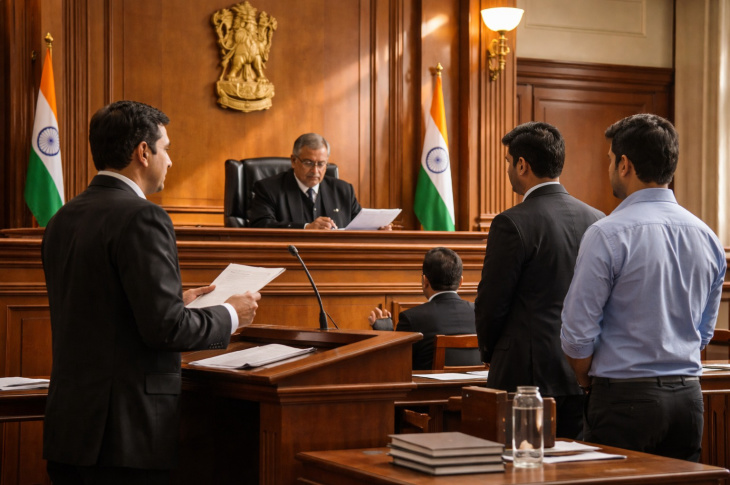


Bail Under the UAPA: Understanding Statutory Restrictions and Judicial Interpretation in India


Introduction
Bail is one of the most important protections available to individuals in the criminal justice system. It ensures that a person accused of a crime is not unnecessarily kept in jail before their guilt is proven in court. In India, this principle flows from the Constitution, particularly the right to life and personal liberty under Article 21.
However, when it comes to serious offences related to terrorism and national security, the law takes a different approach. The Unlawful Activities (Prevention) Act, 1967 (UAPA) creates a stricter legal framework where obtaining bail becomes significantly more difficult. In such cases, the usual rule—“bail is the rule and jail is the exception”—is often reversed.
Understanding the Concept of Bail in India
What Is Bail?
Bail is a legal arrangement that allows a person accused of a crime to be released from custody while their case is pending in court. The person promises to appear before the court whenever required and follow certain conditions.
In simple terms:
Bail is temporary freedom granted to an accused person until the trial is completed.
Purpose of Bail
Bail serves several important purposes:
-
Protects personal liberty
-
Prevents unnecessary detention
-
Ensures presence of the accused in court
-
Maintains fairness in the justice system
Courts generally believe that imprisonment before conviction should be avoided unless absolutely necessary.
The Constitutional Foundation of Bail
Article 21: Right to Life and Personal Liberty
Article 21 of the Constitution of India guarantees that no person shall be deprived of life or personal liberty except according to procedure established by law.
This principle forms the backbone of bail jurisprudence in India. Courts have repeatedly emphasized that:
-
Liberty is the rule
-
Detention is the exception
-
Punishment can only follow conviction
Presumption of Innocence
Another key principle is that:
Every accused person is presumed innocent until proven guilty.
This means that a person should not be treated as a criminal before the court determines their guilt.
The General Rule: Bail Is the Rule, Jail Is the Exception
In ordinary criminal cases, courts follow a liberal approach while granting bail.
When Bail Is Usually Granted
Courts typically grant bail if:
-
The accused is not likely to run away
-
The accused will cooperate with the investigation
-
There is no risk of tampering with evidence
-
The offence is not extremely serious
-
The trial may take a long time
Example
Suppose a person is accused of cheating in a financial transaction. If they:
-
Have a permanent address
-
Are cooperating with police
-
Have no criminal history
The court will likely grant bail.
Why the UAPA Is Different
Purpose of the UAPA
The Unlawful Activities (Prevention) Act was enacted to protect the sovereignty, integrity, and security of India.
It deals with offences such as:
-
Terrorist activities
-
Funding terrorism
-
Membership of banned organizations
-
Conspiracy against the state
-
Activities threatening national security
Because these offences involve serious risks to society, the law adopts stricter procedures.
Bail Under the UAPA: A Stricter Legal Framework
The Key Provision: Section 43D(5)
The most important rule governing bail under the UAPA is found in Section 43D(5).
This provision states that:
Bail cannot be granted if the court believes the accusations are prima facie true.
What Does “Prima Facie True” Mean?
The phrase means:
There is enough evidence at first glance to suggest that the accused may have committed the offence.
The court does not decide guilt at this stage. Instead, it checks whether the allegations appear credible based on the available material.
How Section 43D(5) Changes the Bail Process
In ordinary cases, courts examine evidence carefully before deciding bail.
In UAPA cases, the process is different.
Under Normal Law
Courts ask:
-
Is the accused likely to flee?
-
Will they interfere with the investigation?
-
Is detention necessary?
Under UAPA
Courts primarily ask:
Do the allegations appear to be true at first glance?
If the answer is yes, bail is usually denied.
Why Bail Is Harder to Get in UAPA Cases
There are several reasons for stricter bail rules under the UAPA.
1. National Security Concerns
Terrorism-related offences can endanger public safety and national stability.
2. Risk of Evidence Destruction
Such cases often involve:
-
Digital evidence
-
Financial transactions
-
International connections
Authorities fear that release on bail may allow tampering with evidence.
3. Organized Networks
Many terrorism cases involve networks of individuals. Releasing one person may affect the investigation.
Judicial Interpretation of Bail Under the UAPA
Indian courts have played a critical role in interpreting the strict bail provisions under the UAPA.
Over time, judges have tried to balance two competing interests:
-
National security
-
Personal liberty
The Landmark Interpretation: The “Watali Principle”
One of the most influential rulings on bail under the UAPA established a key legal principle.
Core Idea
At the bail stage:
Courts should assume that the prosecution’s evidence is correct.
This means judges generally do not conduct a detailed examination of evidence while deciding bail.
Practical Impact
This interpretation significantly limits judicial discretion and makes bail more difficult to obtain.
When Courts Still Grant Bail Under the UAPA
Despite strict rules, courts sometimes grant bail in exceptional circumstances.
Common Situations
Bail may be granted if:
-
Evidence is weak or unreliable
-
The accused has a minor role
-
The trial is excessively delayed
-
The accused is seriously ill
-
The prosecution fails to show involvement
Delay in Trial as a Ground for Bail
One of the most important developments in recent years is the recognition that prolonged detention without trial can violate constitutional rights.
Example Scenario
Imagine:
-
An accused person has been in jail for 6–7 years
-
The trial has not started
-
Hundreds of witnesses are yet to be examined
In such cases, courts may grant bail to protect the right to personal liberty.
Case Study: The Delhi Riots Conspiracy Case
A major example that illustrates the strict bail framework under the UAPA involves the 2020 Delhi riots.
Background
In February 2020, violent clashes occurred in parts of Northeast Delhi, leading to:
-
Loss of lives
-
Injuries
-
Property damage
-
Social unrest
Authorities alleged that the violence was part of a planned conspiracy and invoked the UAPA against several individuals.
Why Bail Was Denied to Some Accused
Courts denied bail to certain individuals because:
-
They were alleged to have played leadership roles
-
Evidence suggested involvement in planning activities
-
There were witness statements and digital records
The court concluded that the accusations appeared credible at first glance.
Why Bail Was Granted to Others
In the same case, some accused were granted bail.
Reasons
Courts found that:
-
Their roles were limited
-
They followed instructions rather than leading the conspiracy
-
There was no strong evidence of planning or coordination
This shows that bail decisions under the UAPA are made on an individual basis.
Individual Role Matters in Bail Decisions
Courts carefully analyze the specific role of each accused person.
Leadership Role
Bail is less likely if the accused:
-
Planned the offence
-
Organized activities
-
Directed others
Supporting Role
Bail is more likely if the accused:
-
Performed minor tasks
-
Had limited involvement
-
Did not control the operation
The Importance of Evidence in UAPA Bail Cases
Evidence plays a central role in determining bail under the UAPA.
Types of Evidence Considered
Courts often examine:
-
Phone records
-
Emails and messages
-
Financial transactions
-
Witness statements
-
Surveillance data
Example
If investigators show that an accused person transferred money to a banned organization, the court may consider this strong evidence and deny bail.
Mere Association Is Not Enough
Courts have clarified that simple association with a person or organization is not sufficient to deny bail.
Example
Possessing books, pamphlets, or literature related to a banned organization does not automatically prove involvement in terrorism.
The prosecution must show:
-
Active participation
-
Support for illegal activities
-
Intent to commit unlawful acts
The Role of Courts in Protecting Liberty
Even under strict laws like the UAPA, courts remain guardians of constitutional rights.
Judges are responsible for ensuring that:
-
Arrests are lawful
-
Evidence is credible
-
Detention is justified
-
Trials proceed without delay
Practical Challenges in UAPA Bail Cases
1. Long Investigations
UAPA cases often involve complex investigations that take years.
2. Large Volumes of Evidence
Cases may include thousands of documents, digital files, and witness statements.
3. Slow Trial Process
Trials can be delayed due to:
-
Court workload
-
Witness availability
-
Legal procedures
Real-Life Impact on Accused Persons
Extended detention under the UAPA can have serious consequences.
Financial Impact
-
Loss of employment
-
Legal expenses
-
Family financial stress
Emotional Impact
-
Anxiety
-
Social stigma
-
Family hardship
Legal Impact
-
Difficulty preparing a defense
-
Limited access to evidence
Rights of an Accused Person in UAPA Cases
Even under strict laws, accused persons have several important rights.
Key Rights
-
Right to legal representation
-
Right to a fair trial
-
Right to challenge evidence
-
Right to apply for bail multiple times
-
Right to medical care in custody
Can Bail Be Reapplied After Rejection?
Yes.
An accused person can file a new bail application if circumstances change.
Common Grounds for Reapplication
-
New evidence emerges
-
Witnesses are examined
-
Trial is delayed
-
Health condition worsens
Conditions Imposed When Bail Is Granted
Courts often impose strict conditions to ensure compliance.
Typical Bail Conditions
-
Deposit of bond money
-
Regular court attendance
-
Travel restrictions
-
No contact with witnesses
-
Cooperation with investigation
Violation of these conditions can result in cancellation of bail.
Practical Guidance for Families and Lawyers
1. Maintain Complete Documentation
Keep records of:
-
Medical reports
-
Employment details
-
Address proof
-
Character references
These documents can support a bail application.
2. Monitor Trial Progress
Track:
-
Hearing dates
-
Witness examination
-
Case status
Delays can strengthen arguments for bail.
3. Avoid Public Statements
Public comments about the case can:
-
Influence witnesses
-
Affect legal strategy
-
Complicate proceedings
4. Seek Experienced Legal Representation
UAPA cases involve complex legal procedures. Professional legal guidance is essential.
Key Takeaways
-
Bail protects personal liberty and ensures fairness in criminal proceedings.
-
The UAPA introduces stricter rules due to national security concerns.
-
Section 43D(5) makes bail difficult if accusations appear credible.
-
Courts balance public safety with constitutional rights.
-
Individual role and evidence are crucial in bail decisions.
-
Delay in trial can become a strong ground for bail.
Conclusion
Bail under the UAPA represents one of the most challenging areas of Indian criminal law. The legislation reflects the State’s responsibility to protect national security, while the judiciary continues to safeguard individual liberty.
The legal system seeks to strike a careful balance between these competing interests. Courts must ensure that dangerous individuals do not misuse freedom, while also preventing unnecessary detention of innocent persons.
For accused individuals and their families, understanding the legal framework is essential. Knowing the rules, rights, and procedures can make a significant difference in navigating the justice system effectively.
Ultimately, the debate around bail under the UAPA is not just about law—it is about the broader question of how a democratic society protects both security and freedom.
Frequently asked questions
Is bail possible in UAPA cases?
Is bail possible in UAPA cases?
Yes, but it is more difficult to obtain compared to ordinary criminal cases.
How long can a person be kept in jail without bail under the UAPA?
How long can a person be kept in jail without bail under the UAPA?
There is no fixed maximum period. However, courts may grant bail if the trial is excessively delayed.
Does being accused under the UAPA mean automatic imprisonment?
Does being accused under the UAPA mean automatic imprisonment?
No. Each case is examined individually based on evidence and legal provisions.
Can health issues be a reason for bail?
Can health issues be a reason for bail?
Yes. Serious medical conditions can be considered by courts while deciding bail.

Online Consultation


Online Consultations


Trending
Frequently asked questions
Is bail possible in UAPA cases?
Is bail possible in UAPA cases?
Yes, but it is more difficult to obtain compared to ordinary criminal cases.
How long can a person be kept in jail without bail under the UAPA?
How long can a person be kept in jail without bail under the UAPA?
There is no fixed maximum period. However, courts may grant bail if the trial is excessively delayed.
Does being accused under the UAPA mean automatic imprisonment?
Does being accused under the UAPA mean automatic imprisonment?
No. Each case is examined individually based on evidence and legal provisions.
Can health issues be a reason for bail?
Can health issues be a reason for bail?
Yes. Serious medical conditions can be considered by courts while deciding bail.
Online Consultations


Ask a Lawyer