


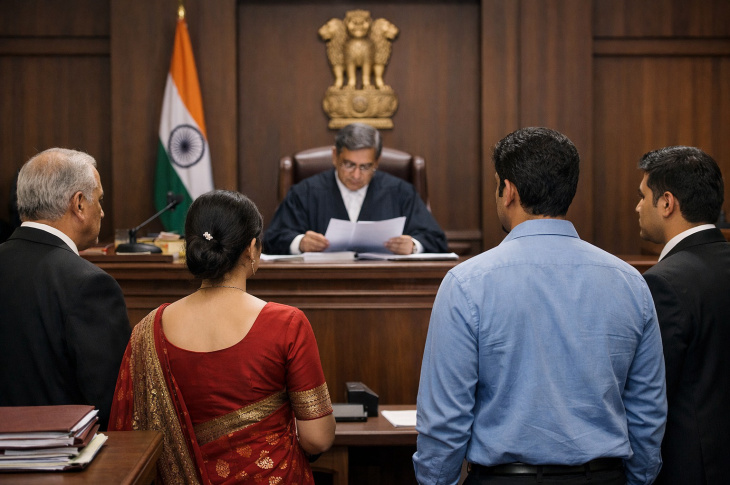


Asking Wife to Care for Family Member Not Cruelty Under Section 498A IPC: Delhi High Court


Domestic disputes often raise difficult legal questions about what constitutes cruelty within a marriage. One such important clarification recently came from the Delhi High Court, which held that merely asking a wife to care for a family member cannot automatically be treated as cruelty under Section 498A of the Indian Penal Code (IPC).
This judgment is significant because it addresses a common concern in Indian households—the expectations placed on spouses within a family setting—and clarifies the difference between normal family responsibilities and criminal misconduct.
Also Read: The Role of a Family Dispute Lawyer in Protecting Your Rights During Divorce
Understanding Section 498A IPC: A Quick Overview
Before discussing the court’s ruling, it is essential to understand the purpose and scope of Section 498A IPC.
What is Section 498A IPC?
Section 498A of the Indian Penal Code deals with cruelty by a husband or his relatives toward a married woman. It was introduced to protect women from:
-
Domestic violence
-
Harassment for dowry
-
Emotional and mental abuse
-
Physical cruelty
-
Coercion for property or financial demands
Legal Definition of Cruelty Under Section 498A
Under the law, cruelty generally includes:
- Any willful conduct that is likely to:
-
Drive a woman to commit suicide
-
Cause serious injury or danger to life, limb, or health
-
- Harassment with the intention of forcing unlawful demands, such as:
-
Dowry
-
Money
-
Property or valuable security
-
Why This Law Is Important
Section 498A is considered a powerful legal tool because:
-
It protects women from abuse within marriage
-
It allows police to register a criminal case
-
It acts as a deterrent against domestic violence
However, courts have repeatedly emphasized that not every marital disagreement amounts to cruelty. This is where the recent Delhi High Court judgment becomes highly relevant.
Also Read: Protect Your Family: 10 Ways a Family Lawyer Can Assist You
Key Issue in the Case: Is Asking a Wife to Care for a Family Member Cruelty?
The central question before the court was straightforward but important:
Can asking a wife to help care for an elderly or sick family member be considered cruelty under Section 498A IPC?
The court answered:
No.
It clarified that ordinary family expectations, such as assisting in caregiving, do not automatically amount to criminal cruelty unless they are accompanied by harassment, coercion, or abuse.
Background of the Case: Understanding the Dispute
To fully understand the court’s reasoning, let us examine the factual background in a simplified manner.
Marriage and Initial Disagreements
-
The couple got married in January 2005.
-
Soon after marriage, differences arose between the spouses.
-
The wife reportedly found it difficult to adjust to the matrimonial home.
-
She began spending most of her time at her parental home in Delhi.
Divorce Proceedings
The husband later filed for divorce under the Hindu Marriage Act, citing marital issues.
Eventually:
-
A court granted an ex parte divorce decree in September 2012.
-
This means the divorce was granted in the absence of the other party.
Criminal Complaints Filed After Divorce
After the divorce:
-
The wife filed a complaint under the Domestic Violence Act
-
An FIR was registered against the husband and his family members under:
-
Section 498A IPC
-
Section 406 IPC (criminal breach of trust)
-
Section 34 IPC (common intention)
-
The accused then approached the High Court seeking to quash the FIR, arguing that the allegations were vague and malicious.
Also Read: Divorce Law in India
What the Delhi High Court Observed
The court carefully examined the facts, legal provisions, and evidence before reaching its conclusion.
1. Caregiving Requests Are Not Automatically Cruelty
One of the most important observations made by the court was:
Asking a spouse to help care for a family member is a normal family expectation and cannot be treated as cruelty unless it involves harassment or coercion.
For example:
-
Helping care for an elderly parent
-
Assisting a sick relative
-
Supporting household responsibilities
These actions are generally considered part of family life in India.
Also Read: How To File Mutual Divorce? Mutual Divorce Process
The Court’s View on Vague and General Allegations
Another major aspect of the judgment was the court’s criticism of vague accusations.
What Are Vague or Omnibus Allegations?
These are statements that:
-
Do not mention specific incidents
-
Lack dates or details
-
Do not identify who committed the act
-
Are general and sweeping in nature
Why Courts Reject Such Allegations
The court emphasized that criminal charges require:
-
Clear evidence
-
Specific details
-
Demonstration of intent
Without these elements, a case cannot proceed.
Practical Example
Instead of saying:
“My in-laws harassed me regularly.”
A legally valid complaint should state:
“On 15 March 2021, my husband demanded ₹2 lakh and threatened me when I refused.”
Specific details make the allegation credible and legally actionable.
Also Read: Legal Grounds for Divorce in India
Distinguishing Ordinary Matrimonial Disputes from Criminal Cruelty
The judgment highlights a crucial legal principle:
Not every disagreement in marriage is a criminal offence.
Examples of Ordinary Marital Disputes
These usually do not qualify as cruelty:
-
Arguments about household responsibilities
-
Disagreements about living arrangements
-
Differences in lifestyle or expectations
-
Minor conflicts between family members
Examples of Criminal Cruelty
These may fall under Section 498A:
-
Physical violence
-
Repeated threats or intimidation
-
Dowry demands
-
Severe emotional abuse
-
Forced isolation or deprivation
Understanding this distinction can prevent unnecessary litigation.
Court’s Findings on Section 406 IPC (Stridhan and Property)
The wife also alleged that her jewellery and personal belongings were retained by her in-laws.
What Is Required to Prove Section 406 IPC?
To establish criminal breach of trust, the following must be proven:
-
Entrustment of property
-
Dishonest misappropriation
-
Refusal to return property
Court’s Observation
The court found:
-
No detailed description of the jewellery
-
No proof of entrustment
-
No evidence of refusal to return
Therefore, the allegations did not meet the legal requirements.
Also Read: Cruelty As A Ground For Divorce
Impact of Divorce on Domestic Violence Complaints
Another important issue considered by the court was the timing of the complaint.
Filing of Complaints After Divorce
The court noted that:
-
The marriage had already been legally dissolved
-
The complaints were filed after the divorce decree
This raised doubts about the intention behind the proceedings.
Legal Principle Established
Once a valid divorce ends the marital relationship:
-
Certain legal claims may weaken
-
Courts may examine whether the complaint is genuine or retaliatory
This does not mean complaints cannot be filed after divorce—but they must be supported by strong evidence.
When Can Courts Quash an FIR?
The High Court relied on established legal principles to decide whether the case should continue.
Grounds for Quashing an FIR
Courts may cancel an FIR if:
-
No offence is disclosed
-
Allegations are false or malicious
-
Evidence is insufficient
-
Proceedings misuse the legal process
Why the FIR Was Quashed in This Case
The court concluded that:
-
The allegations lacked specific details
-
No evidence of cruelty or dowry demand existed
-
The complaint appeared to be an attempt to revive a marital dispute
Therefore, continuing the case would have been an abuse of the legal system.
Why This Judgment Matters for Indian Families
This decision has practical implications for millions of families across India.
1. Clarifies Family Responsibilities
The ruling confirms that:
Normal caregiving responsibilities do not amount to cruelty.
This is especially relevant in Indian households where:
-
Joint families are common
-
Elderly care is shared among members
-
Spouses support each other’s relatives
2. Prevents Misuse of Criminal Law
Courts have repeatedly expressed concern about the misuse of Section 498A.
This judgment reinforces that:
-
Criminal law should not be used as a weapon in marital disputes
-
Genuine victims must be protected
-
False allegations must be discouraged
3. Protects Both Spouses
The ruling promotes fairness by:
-
Protecting women from genuine abuse
-
Protecting families from baseless criminal charges
Balanced justice strengthens trust in the legal system.
Real-Life Scenarios to Understand the Judgment
Let us look at practical examples that reflect the court’s reasoning.
Scenario 1: Caring for an Elderly Parent
A husband asks his wife to help care for his sick mother.
If:
-
The request is reasonable
-
No harassment or threats are involved
Then:
This is not cruelty under Section 498A.
Scenario 2: Forced Caregiving with Abuse
A wife is forced to provide round-the-clock care for a bedridden relative.
If:
-
She is verbally abused
-
She is denied rest or medical help
-
She is threatened with violence
Then:
This may qualify as cruelty.
Scenario 3: False Dowry Allegations After Divorce
A couple divorces peacefully.
Later:
- One spouse files a criminal complaint without evidence
In such cases:
Courts may dismiss the complaint to prevent misuse of the law.
Practical Advice for Married Couples
Understanding your rights and responsibilities can help prevent legal disputes.
For Husbands and In-Laws
-
Treat your spouse with dignity and respect
-
Avoid unreasonable demands
-
Maintain clear communication
-
Keep records of financial transactions
For Wives
-
Document incidents of harassment or abuse
-
Seek legal advice early
-
Avoid filing complaints without evidence
-
Consider mediation before litigation
For Both Spouses
-
Resolve conflicts through dialogue
-
Seek counseling when necessary
-
Use legal remedies responsibly
Healthy communication often prevents legal battles.
Evidence Required to Prove Cruelty Under Section 498A
Courts rely heavily on evidence when deciding cases.
Types of Evidence That Strengthen a Case
-
Medical reports
-
Police complaints
-
Witness statements
-
Messages or emails
-
Financial records
-
Photographs or videos
Evidence That Courts May Reject
-
General accusations
-
Unverified claims
-
Statements without proof
-
Delayed complaints without explanation
Strong evidence increases the chances of success in court.
Role of Courts in Balancing Justice
Indian courts play a crucial role in protecting both victims and the accused.
Key Judicial Principles
Courts aim to:
-
Prevent domestic violence
-
Protect family harmony
-
Ensure fair trials
-
Avoid misuse of criminal law
The Delhi High Court judgment reflects these principles.
Key Takeaways from the Delhi High Court Judgment
Let us summarize the most important lessons from this case.
-
Asking a wife to care for a family member is not cruelty by itself.
-
Vague and general allegations cannot sustain criminal charges.
-
Courts distinguish between marital disagreements and criminal offences.
-
Evidence is essential to prove cruelty under Section 498A.
-
Misuse of criminal law can lead to dismissal of cases.
These principles provide clarity for families and legal professionals alike.
Conclusion
The Delhi High Court’s ruling that asking a wife to care for a family member is not cruelty under Section 498A IPC is a significant step toward balancing family responsibilities and legal protections. It reinforces the idea that criminal law should address genuine abuse—not ordinary family expectations or interpersonal conflicts.
For Indian families, this judgment offers reassurance that the law recognizes the realities of family life while still protecting individuals from harm. It also serves as a reminder that clear evidence, specific allegations, and responsible use of legal remedies are essential in matrimonial disputes.
If you are facing issues related to domestic violence, marital disputes, or false allegations, seeking timely legal guidance can help you protect your rights and resolve conflicts effectively.
Frequently asked questions
Is asking a wife to care for in-laws considered cruelty?
Is asking a wife to care for in-laws considered cruelty?
No. Asking a spouse to assist in caring for family members is generally considered a normal family responsibility unless it involves harassment or abuse.
Can a case under Section 498A be dismissed?
Can a case under Section 498A be dismissed?
Yes. Courts can quash an FIR if:
- The allegations are false
- Evidence is insufficient
- No offence is disclosed
What is the punishment under Section 498A IPC?
What is the punishment under Section 498A IPC?
The punishment may include:
- Imprisonment up to 3 years
- Fine
- Both imprisonment and fine
Can complaints be filed after divorce?
Can complaints be filed after divorce?
Yes, but the complainant must provide strong evidence showing that the offence occurred during the marriage.
What should you do if falsely accused under Section 498A?
What should you do if falsely accused under Section 498A?
You should:
- Consult a qualified lawyer immediately
- Gather evidence supporting your defense
- Apply for anticipatory bail if necessary
- Consider filing a petition to quash the FIR

Online Consultation


Online Consultations


Trending
Frequently asked questions
Is asking a wife to care for in-laws considered cruelty?
Is asking a wife to care for in-laws considered cruelty?
No. Asking a spouse to assist in caring for family members is generally considered a normal family responsibility unless it involves harassment or abuse.
Can a case under Section 498A be dismissed?
Can a case under Section 498A be dismissed?
Yes. Courts can quash an FIR if:
- The allegations are false
- Evidence is insufficient
- No offence is disclosed
What is the punishment under Section 498A IPC?
What is the punishment under Section 498A IPC?
The punishment may include:
- Imprisonment up to 3 years
- Fine
- Both imprisonment and fine
Can complaints be filed after divorce?
Can complaints be filed after divorce?
Yes, but the complainant must provide strong evidence showing that the offence occurred during the marriage.
What should you do if falsely accused under Section 498A?
What should you do if falsely accused under Section 498A?
You should:
- Consult a qualified lawyer immediately
- Gather evidence supporting your defense
- Apply for anticipatory bail if necessary
- Consider filing a petition to quash the FIR
Online Consultations


Ask a Lawyer