
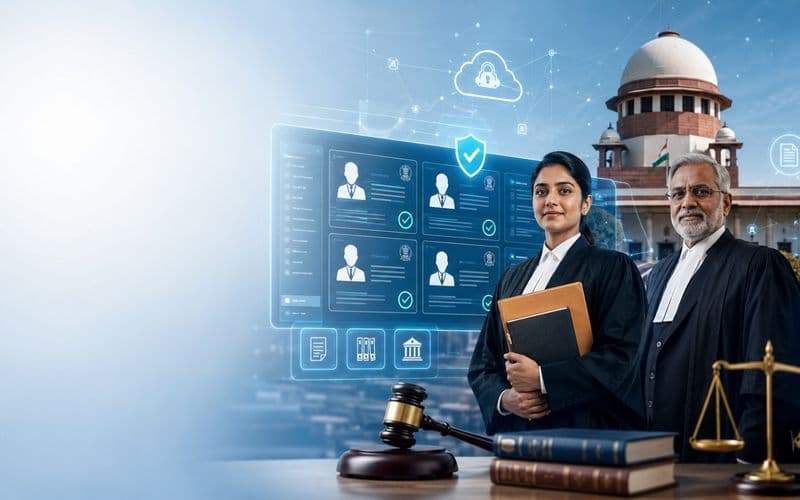
India's legal system has undergone remarkable digital transformation over the past decade. From e-filing and virtual court hearings to online case status tracking, technology has significantly improved access to justice. However, one important area has remained largely dependent on fragmented records and manual processes—the registration and verification of advocates.
The Supreme Court's recent observations supporting the creation of a National Digital Registry for Advocates have sparked an important conversation about the future of India's legal profession. If implemented effectively, this initiative could improve transparency, strengthen public trust, simplify lawyer verification, and provide better opportunities for thousands of young advocates entering the profession.
More importantly, it has the potential to create a secure digital ecosystem where lawyers, courts, clients, and regulatory bodies can interact with greater confidence and efficiency.
This article explains the proposed registry, its objectives, potential benefits, implementation challenges, and what it could mean for advocates and litigants across India.
What Is the National Digital Registry for Advocates?
A National Digital Registry for Advocates is a centralized digital database that would contain verified professional information about advocates enrolled under the Advocates Act, 1961.
Instead of maintaining isolated records across different State Bar Councils, the registry would create a unified national platform where authorized information about practicing advocates could be accessed and verified.
The registry may include: | Information | Purpose | | Advocate's name | Identification | | Enrollment number | Verification | | State Bar Council details | Regulatory confirmation | | Practice status | Active, suspended, retired | | Date of enrollment | Professional history | | Educational qualifications | Credential verification | | Office address | Professional contact | | Digital identity | Secure authentication | | Continuing legal education records | Professional development | | Disciplinary orders (where legally permissible) | Public confidence |
The primary objective is to create one authentic source of verified information for India's legal professionals.
Why Does India Need a National Digital Registry for Advocates?
India has one of the largest legal communities in the world, with advocates enrolled across numerous State Bar Councils. However, there is currently no comprehensive national database that allows easy verification of a lawyer's credentials.
This creates several practical challenges.
- Difficulty Verifying Lawyers
Many clients have no reliable method to verify whether a person claiming to be an advocate is actually enrolled with a State Bar Council.
As a result, individuals may unknowingly engage unauthorized practitioners.
A national registry could make lawyer verification simple and accessible.
- Preventing Unauthorized Practice
Courts and regulatory authorities have periodically expressed concern over individuals practicing law without proper enrollment.
Such instances can result in:
- Misrepresentation
- Fraud
- Professional misconduct
- Loss of public confidence
- Harm to litigants
A digitally verified registry would significantly reduce the possibility of fake legal practitioners operating within the justice system.
- Improving Record Management
Currently, advocate records are maintained independently by different State Bar Councils.
This often leads to:
- Delayed updates
- Inconsistent data
- Duplicate records
- Difficulty tracking changes
- Administrative inefficiencies
A centralized system would enable better coordination among regulatory authorities.
Why the Supreme Court's Observations Are Significant
When the Supreme Court highlights structural reforms within the legal profession, it often reflects broader concerns about improving the justice delivery system.
The Court's emphasis extends beyond digitization. It recognizes that modern courts require modern professional infrastructure.
India has already embraced:
- E-Courts
- Digital filing
- Online judgments
- Virtual hearings
- Electronic case management
Creating a verified digital identity for advocates naturally complements these initiatives.
How a Digital Registry Could Benefit Young Lawyers
One of the most important aspects of the proposal is its potential to support newly enrolled advocates.
Many young lawyers struggle during the early years because they often lack:
- Professional visibility
- Client trust
- Established networks
- Market recognition
A verified national profile could help level the playing field.
Possible Advantages
Better Professional Visibility
Clients searching for legal professionals could verify genuine advocates more easily.
Enhanced Credibility
Verified credentials increase public confidence, especially for newly enrolled advocates.
Easier Digital Practice
Future integration with court systems may simplify:
- Filing documents
- Authentication
- Case appearances
- Professional communication
Equal Opportunity
Rather than relying solely on personal connections, young advocates may gain visibility through verified professional profiles.
Benefits for Clients and Litigants
For clients, choosing a lawyer is often a decision based on trust.
A National Digital Registry could make this process much safer.
- Clients May Be Able to Verify:
- Enrollment status
- State Bar Council registration
- Practice eligibility
- Professional identity
- Contact information
- Regulatory status (subject to legal safeguards)
Greater transparency helps people make informed decisions before engaging legal representation.
Advantages for the Indian Judiciary
Courts may also benefit from a verified advocate database.
Potential improvements include:
Faster Identity Verification
Judges and court staff could verify advocates quickly.
Reduced Administrative Burden
Manual verification processes may become unnecessary.
Better Integration with E-Courts
Digital authentication could streamline:
- E-filing
- Online appearances
- Digital signatures
- Case allocation
Benefits for Bar Councils
The Bar Council of India and State Bar Councils may gain better regulatory oversight through centralized records.
Possible improvements include:
- Faster enrollment updates
- Improved record accuracy
- Better disciplinary monitoring
- Simplified data management
- More efficient policy planning
Reliable data also helps in understanding trends within the legal profession.
Digital Identity: The Future of Legal Practice
Professional identity is increasingly becoming digital.
A National Digital Registry could eventually support:
- Secure advocate login systems
- Digital certificates
- Electronic identity verification
- Integration with government platforms
- Paperless court interactions
This aligns with India's broader Digital India initiative.
Could the Registry Improve Ethical Standards?
Technology alone cannot eliminate unethical conduct.
However, verified professional identities may discourage:
- False claims about qualifications
- Misrepresentation
- Unauthorized legal advice
- Fake legal profiles on digital platforms
Combined with existing professional ethics rules, digital verification could strengthen accountability.
Relationship Between the Registry and Social Media Conduct
As legal professionals increasingly use digital platforms to educate the public and promote their services, questions regarding ethical online conduct have become more important.
A verified registry could support:
- Authentication of genuine advocates
- Prevention of fake legal profiles
- Better professional accountability
- Increased public confidence
This may complement future guidelines governing advocates' digital presence.
International Practices: How Other Countries Verify Lawyers
Many countries already maintain searchable online databases of licensed legal professionals.
Examples include:
| Country | Public Verification Available | | United Kingdom | Yes | | Australia | Yes | | Singapore | Yes | | Canada | Yes | | United States (State Bars) | Yes |
These systems generally allow users to verify:
- License status
- Admission date
- Practice eligibility
- Regulatory information India could adopt a model suited to its own legal and regulatory framework.
Challenges That Must Be Addressed
While the proposal offers significant advantages, successful implementation requires careful planning.
- Data Privacy The registry would contain sensitive personal and professional information. Authorities must ensure:
- Strong cybersecurity
- Data encryption
- Access controls
- Compliance with applicable data protection laws
-
Accuracy of Information Incorrect records could negatively affect advocates. Regular verification and timely updates will be essential.
-
Coordination Among Authorities Successful implementation would require cooperation between:
- Bar Council of India
- State Bar Councils
- Courts
- Government agencies
- Technology partners
- Cost and Infrastructure Building and maintaining a secure nationwide platform will require:
- Technical expertise
- Funding
- Continuous maintenance
- User support
- Accessibility The system should remain user-friendly for advocates across urban and rural India. Training and digital support will be important.
How the Registry Could Transform India's Legal Ecosystem
If implemented effectively, the National Digital Registry could reshape legal practice in multiple ways.
For Advocates
- Verified professional identity
- Improved credibility
- Easier digital practice
- Better career opportunities
For Clients
- Reliable lawyer verification
- Greater transparency
- Reduced risk of fraud
For Courts
- Faster verification
- Efficient case management
- Better digital integration
For Regulators
- Accurate national data
- Better compliance monitoring
- Improved governance
Possible Future Features
As technology evolves, the registry could include additional services such as:
- QR-code-based advocate verification
- Integration with e-filing portals
- Secure digital certificates
- Continuing legal education tracking
- Online renewal and compliance management
- Digital professional ID cards
- AI-assisted document verification (subject to safeguards)
These features could make legal administration more efficient while reducing paperwork and delays.
Final Thoughts
The proposed National Digital Registry for Advocates represents more than a technological upgrade—it reflects a broader vision for a modern, transparent, and accountable legal profession. By creating a centralized system for verifying advocates, India can strengthen public confidence, reduce the risk of unauthorized practice, improve regulatory efficiency, and better support the next generation of legal professionals.
While successful implementation will depend on robust data protection, institutional coordination, and continuous updates, the long-term benefits could be substantial. A thoughtfully designed registry would complement the ongoing digital transformation of India's courts and legal services, making the justice system more accessible, trustworthy, and efficient for advocates, litigants, and regulators alike.
As India's legal landscape continues to evolve, staying informed about regulatory and technological reforms is essential for both legal professionals and the public. Follow the latest developments on advocate regulation, digital justice initiatives, and legal compliance to understand how these changes may affect your rights, legal practice, and access to justice.
Frequently Asked Questions
Is the National Digital Registry for Advocates currently operational?
No. The proposal is under consideration, and discussions involving the judiciary, government, and regulatory authorities are ongoing.
Who is expected to maintain the registry?
It is likely to involve coordination between the Bar Council of India, State Bar Councils, and relevant government authorities, though the final framework is yet to be decided.
Will the registry replace State Bar Councils?
No. State Bar Councils are expected to continue performing their statutory functions. The registry would likely serve as a centralized verification platform rather than replacing existing institutions.
Can the public verify lawyers through the proposed registry?
If implemented with public-facing verification features, litigants may be able to confirm whether an advocate is duly enrolled and authorized to practice, subject to privacy and regulatory safeguards.
How will young advocates benefit?
Young lawyers could gain increased visibility, easier credential verification, enhanced credibility, and smoother access to digital legal services.
Will the registry improve online legal services?
Potentially yes. A verified digital identity could strengthen trust in online consultations, e-filing, and other digital legal services.
Comments
Commenting as Guest